

A federal judge declared a mistrial in the case against Jonathan Rinderknecht, the man accused of deliberately setting the blaze that grew into the deadly Palisades Fire, after jurors failed to agree on a verdict.
Rinderknecht was arrested in October 2025 and charged with destruction of property by means of fire. He pleaded not guilty after prosecutors accused him of starting a January 2025 fire that later became one of California’s most destructive disasters.
The jury split sharply. Ten jurors believed Rinderknecht was not guilty, while two believed he was guilty.
Prosecutors Say They Will Try Again
Federal prosecutors did not treat the mistrial as the end of the case. Instead, they made clear they plan to bring Rinderknecht before another jury.
“The evidence is strong that Jonathan Rinderknecht is responsible for igniting the fire on January 1, 2025, which eventually became the Palisades fire,” United States Attorney Bill Essayli said in a post on X. “We fully intend to retry this case before a new jury and obtain guilty verdicts on all charged counts.”
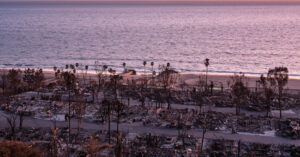
That sets up a second legal fight over a fire that caused staggering damage and left families grieving. Estimates say the blaze caused between $35 billion and $45 billion in damage and killed 12 people.
Still, the first jury could not get there.
Defense Says The Case Fell Short
After the judge declared a mistrial, Rinderknecht’s attorney, Steven Haney, argued the split verdict exposed a major weakness in the government’s case.
“You know, we’d rather have been acquitted, you know, not guilty would have been better than no jury, but I tended to, you know, verdict was very clear that this case does not have the evidence that it needs, and it never did have the evidence that we need,” Haney said.
For the defense, the result was not a full victory. However, it gave Rinderknecht’s legal team a powerful argument heading into any retrial.
Juror Says There Was No Proof
One woman who identified herself as juror number four spoke after the mistrial and said she did not believe prosecutors proved their case.
She said there was “no proof.”
The juror also questioned the government’s theory that an earlier fire somehow held over and later became the Palisades Fire.
“Like I wanted to know, has anybody ever gotten in trouble for a hold over fire anywhere else? Because this hold over theory just wasn’t like it wasn’t working for me,” she said.
She added that retrying Rinderknecht would be a “waste of our American dollars.”
“It makes me sad as an American like that, you know, we couldn’t come to a conclusion,” she said.
Jury Deadlock Ends The Trial
The mistrial came after a confusing moment in court. On Thursday afternoon, jurors first said they had reached a verdict. About 30 minutes later, they returned and said they had no verdict after all.
The judge then asked, “Would an additional instruction or the re-reading of any testimony help the jury in their deliberations?”
The jury answered, “There is nothing the court can do to assist the jury in their deliberations. Additional instructions or rereading the testimony would not help in deliberations. Unfortunately, we cannot reach a unanimous verdict,”
With that, the judge declared a mistrial.
Prosecutors Pointed To Anger And Online Searches
During the trial, behavioral analyst Kevin Kelm testified that he believed Rinderknecht’s conduct resembled someone motivated by “societal revenge.”
Kelm said that kind of mindset can grow from personal frustrations, including financial problems, work struggles, relationship issues, lifestyle stress or other pressures someone cannot manage day to day.
He also testified that Rinderknecht used ChatGPT to create a “dystopian image” of society. According to testimony, the image showed a barrier between wealthy people and those with far less money.
That theme became important for prosecutors, who argued Rinderknecht had grown angry at society before the fire.
“In the months leading up to the fire, he had become increasingly angry with his life and society at large,” prosecutors wrote in a court filing. “For example, in the weeks and hours leading up to the fire, defendant fixated on Luigi Mangione, who allegedly murdered the UnitedHealthcare CEO in New York City on December 4, 2024.”
Mangione Link Became A Key Issue
Prosecutors said Rinderknecht searched for the terms “free LuigiMangione,” “lets take down all the billionaires” and “reddit lets kill all the billionaires” on Dec. 12 and 13, 2024.
They also alleged that Rinderknecht connected a possible arson motive in Pacific Palisades to resentment toward wealthy people.
“When investigators asked defendant why someone might commit arson in the Pacific Palisades, he responded that it would be out of resentment of the rich enjoying their money as ‘we’re basically being enslaved by them’ and compared such an act of ‘desperation’ to the murder for which Mangione was charged,” prosecutors wrote.
However, Mangione’s attorney, Karen Friedman Agnifilo, pushed back strongly against any effort to connect him to unrelated violence.
“As we have stated before in multiple public court filings, Mr. Mangione does not support violent actions and does not condone past or future political violence. These repeated attempts to connect him to unrelated acts or to insinuate that he condones or supports these acts are irresponsible, dangerous and prejudicial.”
What Comes Next For The Palisades Fire Case
The mistrial does not clear Rinderknecht. It also does not prove the government’s case. Instead, it leaves both sides in a tense holding pattern.
Prosecutors say they will retry the case. The defense says the first trial showed the evidence was not enough. Meanwhile, families affected by the Palisades Fire remain stuck between legal uncertainty and the memory of a disaster that changed their lives.
A new jury may eventually decide what this one could not.