

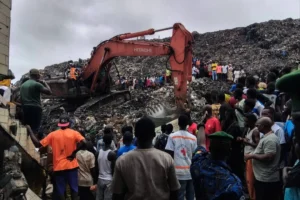
At least 30 people were killed Sunday after a massive landslide struck a sprawling open-air landfill in Guinea’s capital, burying nearby homes and trapping residents beneath tons of waste.
The disaster unfolded at the Dar Es Salam dumpsite in Conakry, where heavy overnight rainfall had soaked and destabilized the enormous mound of garbage. Rescuers and residents rushed to the site as authorities searched for people who may still have been trapped beneath the debris.
Heavy Rain Triggered Dangerous Conditions
The collapse struck one of the largest waste dumps in the West African nation. Reports said the weight of accumulated refuse contributed to the collapse of a three-story building beneath the landfill.
Heavy rainfall overnight further worsened conditions, washing across the massive waste pile and leaving the unstable site especially dangerous.
The landslide destroyed several homes and killed at least 30 people. Six others suffered serious injuries, while emergency crews began searching through the debris for possible survivors.
The scale of the destruction left rescuers facing a difficult and potentially dangerous operation, with unstable waste continuing to pose risks around the site.
Landfill Was Set To Close
The tragedy came as authorities were preparing to close the landfill amid longstanding concerns about its safety.
According to reports, the Dar Es Salam dumpsite had been scheduled to close Sunday after officials warned about hazardous conditions. Lt. Col. Baldé Mamadou Bailo, a sanitation officer with the military engineering battalion, was cited in reports discussing the planned closure.
Officials had also raised concerns following a similar incident at the site in previous years.
Despite those warnings, people were still living in areas surrounding the landfill when the collapse occurred.
Residents Had Received Eviction Notices
Authorities had taken steps to move nearby residents away from the dangerous area before the disaster.
People living close to the dumpsite had reportedly received eviction notices and were instructed to leave as a precaution. However, many residents remained in the area when the massive pile of garbage gave way.
The presence of homes and communities near the landfill dramatically increased the human toll when the waste collapsed.
Meanwhile, emergency teams continued digging through the debris as they searched for anyone who might have survived.
Officials Promise Relocation For Remaining Families
Guinean officials said they would work to relocate families still living near the dangerous site.
“We will ensure that the remaining families are relocated elsewhere,” Dienabou Touré, the minister of territorial administration and decentralization, said at the scene, according to reports.
The statement came as authorities confronted the aftermath of a disaster that had already claimed dozens of lives.
Officials now face the difficult task of clearing the collapsed waste while also preventing additional injuries and protecting nearby residents.
Similar Disaster Struck In 2017
The latest collapse was not the first deadly incident at the Dar Es Salam landfill.
The site experienced a similar disaster in 2017, when torrential rainfall triggered a mudslide that killed at least eight people.
That history has intensified concerns surrounding the landfill’s safety and the risks faced by communities living nearby.
With at least 30 people dead and six seriously injured, the latest disaster has once again drawn attention to the dangers posed by the enormous waste site.