

California has formally walked away from its legal battle with the federal government, ending a high-stakes effort to recover billions of dollars in funding for the state’s long delayed high-speed rail project.
The move signals a major shift in strategy for the embattled rail system, which has faced years of criticism over cost overruns, missed deadlines, and political infighting. Rather than continuing the courtroom fight, state leaders are now pressing forward without federal backing.
California Drops Lawsuit Against Federal Government
Court records show that the California Attorney General’s office filed a notice on Dec. 23 to voluntarily dismiss the lawsuit without prejudice on behalf of the California High-Speed Rail Authority. The case had sought to reinstate roughly $4 billion in federal funding that was pulled earlier this year.
State officials framed the decision as a matter of trust, or the lack of it.

“This action reflects the State’s assessment that the federal government is not a reliable, constructive, or trustworthy partner in advancing high-speed rail in California,” an authority spokesperson said in a statement.
According to the authority, ongoing uncertainty around federal support made the lawsuit untenable.
“The Federal Railroad Administration stated that all work performed by the Authority – whether undertaken as part of cooperative agreements or otherwise – remains ‘at risk’ and may not receive funding. Combined with the Administration’s persistent lack of good-faith engagement, this made clear that the federal government is unlikely to uphold its commitments to California. As a result, the State has opted to move forward without the Trump administration. We regret that they will not share in California’s success,” the spokesperson added.
Why Federal Funding Was Pulled From The Project
The legal fight began after federal transportation officials announced in July that they were withdrawing financial support from the project, citing years of delays and escalating costs.
Transportation Secretary Sean Duffy described the project in blunt terms when announcing the decision.
“This is California’s fault. Governor Newsom and the complicit Democrats have enabled this waste for years. Federal dollars are not a blank check — they come with a promise to deliver results. After over a decade of failures, CHSRA’s mismanagement and incompetence has proven it cannot build its train to nowhere on time or on budget,” said Duffy.
In a formal letter to the rail authority, the Federal Railroad Administration said it was pulling roughly $4 billion in commitments after concluding the project could not be delivered as promised. The agency pointed to mounting delays, major change orders, and substantial federal funds already spent without meeting key milestones.
Sharp Criticism From Trump Administration Officials

President Donald Trump echoed the transportation secretary’s criticism, referring to the project as a “high speed train to nowhere.”
The remarks reinforced the administration’s broader argument that California’s rail authority had failed to demonstrate it could manage the project responsibly or efficiently.
Construction Continues Despite Loss Of Federal Funds
Despite the funding setback, construction has not come to a halt. Work continues on major infrastructure across California’s Central Valley, including the Hanford Viaduct near Bakersfield.
State officials insist the loss of federal money will not derail the project because most of the funding comes from California itself. The authority says federal dollars account for about 18 percent of total program expenditures, with the remainder coming from voter-approved Proposition 1A bonds and revenue from the state’s Cap-and-Invest program.
State Turns To Private Investors To Keep Rail Project Alive
As part of its new approach, the California High-Speed Rail Authority has launched a formal process to attract private investors and developers by summer 2026. Officials say private partnerships could help deliver the project more efficiently.
“Interest from the private sector in investing in California’s high-speed rail project is strong and continues to grow,” said Ian Choudri, the CEO of the authority.
He described the effort as a key step toward accelerating construction.
“Today’s procurement formalizes efforts to partner with private investors and developers, with the shared goal of delivering California’s transformational program faster, smarter, and more economically,” he said. “By leveraging private sector innovation and best practices against strong, stable state funding, we can maximize the value of California’s investment and accelerate delivery of high-speed infrastructure throughout the state.”
What Comes Next For California’s High-Speed Rail Vision
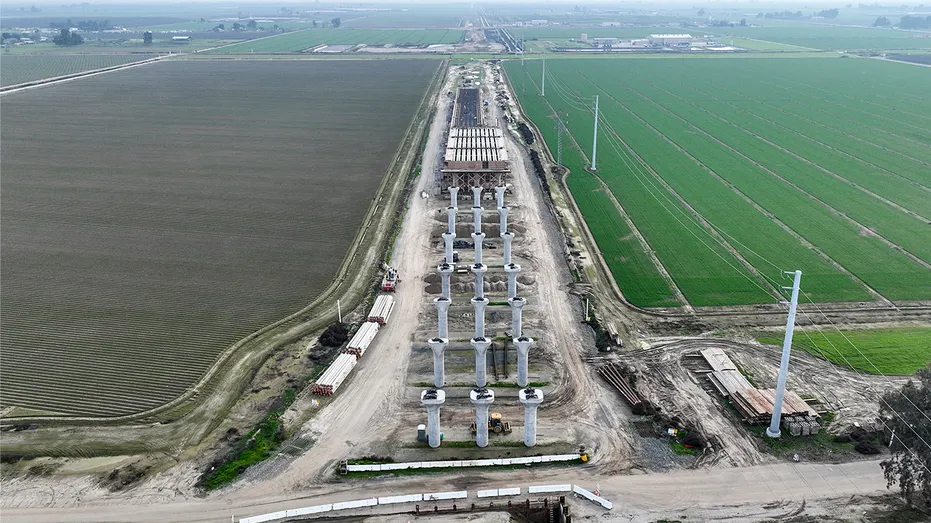
In a recent press release, the rail authority said 171 miles of the system are currently under design or construction between Merced and Bakersfield. Nearly 80 miles of guideway have been completed, along with dozens of major structures.
For now, California appears committed to moving forward without federal support, betting that state funding and private investment can sustain a project that has long been mired in controversy. Whether that gamble pays off remains one of the biggest unanswered questions in the state’s transportation future.