

Actor Mark Ruffalo has intensified his campaign against Senate Democratic leader Chuck Schumer, arguing that the New York senator’s religious convictions and political loyalties make him unsuitable for leadership. His remarks have triggered criticism from political commentators, Jewish advocacy organizations and figures across the political spectrum.
Ruffalo has instead thrown his support behind Maryland Democratic Sen. Chris Van Hollen, describing him as a stronger candidate to lead the party in the Senate.
Ruffalo Questions Schumer’s Leadership and Calls for Change
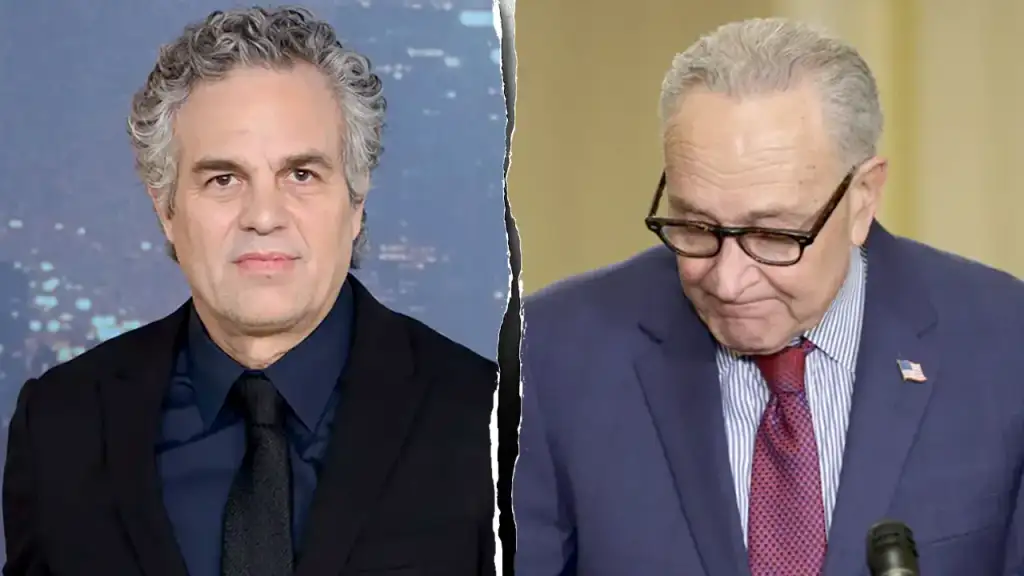
The actor, a four-time Academy Award nominee, renewed his criticism in a series of posts on X, arguing that the Democratic Party needs leadership driven by public interests rather than established political and religious commitments.
“Israel is just one issue in a whole host of reasons Van Hollen is the right leader for our times. We need Justice, we need leadership that follows the will of the people not entrenched religious beliefs and loyalties,” Ruffalo wrote on X. “Does not follow entrenched fossil fuel and corporate interests, nor throws a blind eye to the hard realties [sic] we face today.”
He also questioned whether Schumer could provide the political direction Democrats need, suggesting that the party should embrace a leadership change as it prepares for the incoming Democratic-led Congress.
According to Ruffalo, Van Hollen possesses the integrity, determination and political strength necessary to confront what he described as “the social and moral corruption that has set in with age-old presumptions.”
The actor subsequently made his position even clearer, calling on Democratic voters to pressure their senators into supporting Schumer’s replacement.
“We have absolutely nothing to lose by replacing Sen. Schumer,” Ruffalo wrote.
“We can only gain more justice and freedom. Put pressure on your senators. Now is the time. Keep the momentum of this election going. Thank you, Senator Schumer, but it’s time to move aside.”
Jewish Advocacy Leaders Challenge Ruffalo’s Remarks
However, Ruffalo’s reference to Schumer’s “entrenched religious beliefs and loyalties” quickly became a major point of controversy.
Critics questioned whether the actor was suggesting that Schumer’s Jewish identity influenced his political judgment. Several commentators argued that the wording unfairly singled out the senator’s religious background.
Jonathan Greenblatt, CEO and National Director of the Anti-Defamation League, publicly challenged Ruffalo to explain what he meant.
“Entrenched religious beliefs? Entrenched loyalties? Please elaborate, @MarkRuffalo,” Greenblatt wrote. “Which religion? Loyal to whom?”
Rabbi Yaakov Menken, executive vice president of the Coalition for Jewish Values, also criticized the actor’s argument, questioning why Schumer’s religious background had become part of the leadership debate.
“There are many devout Senators & Congressmen with ‘entrenched religious beliefs.’ Chuck Schumer is not one of them,” Menken wrote. “Van Hollen is far more tied to the Episcopal Bishop of Washington than Schumer is to any leading Rabbi. Guess what really bothers Ruffalo.”
Political commentator Meghan McCain also sought clarification, directly questioning the language Ruffalo had used in his criticism.
“Can you clarify what you mean by ‘entrenched religious beliefs and loyalties’?” McCain asked.
Ruffalo Defends His Position by Citing Schumer’s 2018 AIPAC Remarks
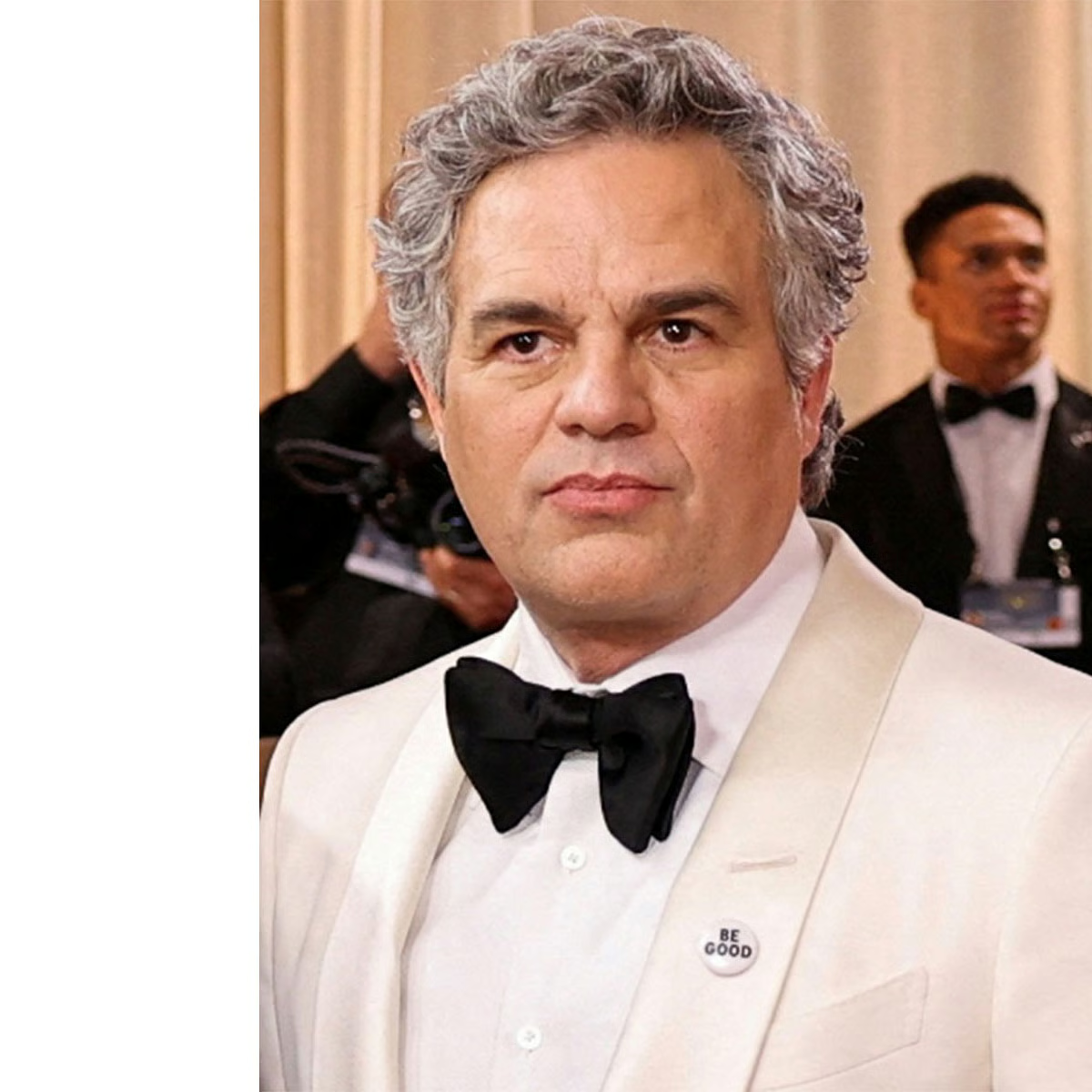
Rather than retreating from his original comments, Ruffalo returned to the controversy on Sunday with a more detailed explanation.
This time, he pointed to remarks Schumer made during the American Israel Public Affairs Committee’s (AIPAC) annual policy conference in 2018.
During that appearance, Schumer was quoted as saying, “Of course, we say it’s our land, the Torah says it, but they don’t believe in the Torah. So that’s the reason there is not peace.”
Ruffalo shared the historical remarks to support his argument, emphasizing that the words belonged to the senator rather than himself.
“These are Senator Schumer’s words, not mine,” Ruffalo added on X.
He then expanded on his position, arguing that religious convictions should not determine the political and territorial rights of other populations.
“Schumer is entitled to his religious beliefs, but those beliefs cannot determine the rights of another people. And they certainly cannot substitute for international law,” Ruffalo continued. “This is a conflict about land, freedom, security, equality and self-determination. Peace requires justice, accountability and respect for the rights of both Palestinians and Israelis.”
Meanwhile, the controversy continued to attract attention, with critics questioning whether Ruffalo’s criticism of Schumer had crossed the line from political disagreement into an attack on his Jewish identity.
Representatives for Ruffalo and Schumer’s office were contacted for comment.
Brooke Goldstein Accuses Ruffalo of Singling Out Jewish Identity
Human rights attorney Brooke Goldstein, executive director of The Lawfare Project and founder of the #EndJewHatred movement, strongly condemned the actor’s remarks.
Goldstein argued that Ruffalo’s repeated focus on Israel had raised concerns about the motivations behind his political activism. She also questioned why Schumer’s Jewish background had become relevant to discussions about his suitability for Democratic leadership.
“And now they’re even turning on one of their own, Senator Chuck Schumer, because apparently even being a loyal Democrat isn’t enough when you’re Jewish,” Goldstein told the publication. “They’re saying the quiet part out loud now, no longer afraid to invoke his Jewish identity as grounds for distrust. The message is unmistakable: ‘He’s a Jew. We can’t trust him.'”
Goldstein further criticized what she described as the actor’s selective approach to international issues.
“His [Ruffalo’s] obsessive fixation on the Jewish state, his selective outrage, and his breathtaking moral relativism raise serious questions about whether his “so called activism” is driven by genuine concern for America’s interests or by hostility toward Jews,” she added.
Previous Antisemitism Controversy Adds to Scrutiny
The latest dispute comes after Ruffalo faced similar accusations earlier in the year over his criticism of the proposed Paramount merger.
At the time, his comments focused on Paramount CEO David Ellison and his father’s history of supporting Israel, prompting criticism from Hollywood figures and others who viewed his remarks as antisemitic.
The renewed confrontation involving Schumer has therefore added another chapter to the debate surrounding Ruffalo’s public statements about Israel, Jewish identity and American political leadership.
While the actor maintains that his criticism concerns political accountability, international law and Palestinian rights, his latest comments have intensified questions about the distinction between criticizing a politician’s positions and invoking that politician’s religious identity.