

One year after the deadly Palisades Fire tore through Los Angeles, the city’s fire department is facing fresh scrutiny. The Los Angeles Fire Department acknowledged this week that its internal after-action report was repeatedly watered down before release, raising new concerns about transparency inside one of the nation’s largest firefighting agencies.
The revelation came from LAFD Chief Jaime Moore, who addressed the matter publicly during an LA Fire Commission meeting. His comments confirmed what many residents feared: that early drafts were altered to protect senior leadership.
“It is now clear that multiple drafts were edited to soften language and reduce explicit criticism of the department leadership in that final report,” Moore said.
“This editing occurred prior to my appointment as Fire Chief. And I can assure you that nothing of this sort will happen ever again while I am Fire Chief.”
Background on a Catastrophic Blaze
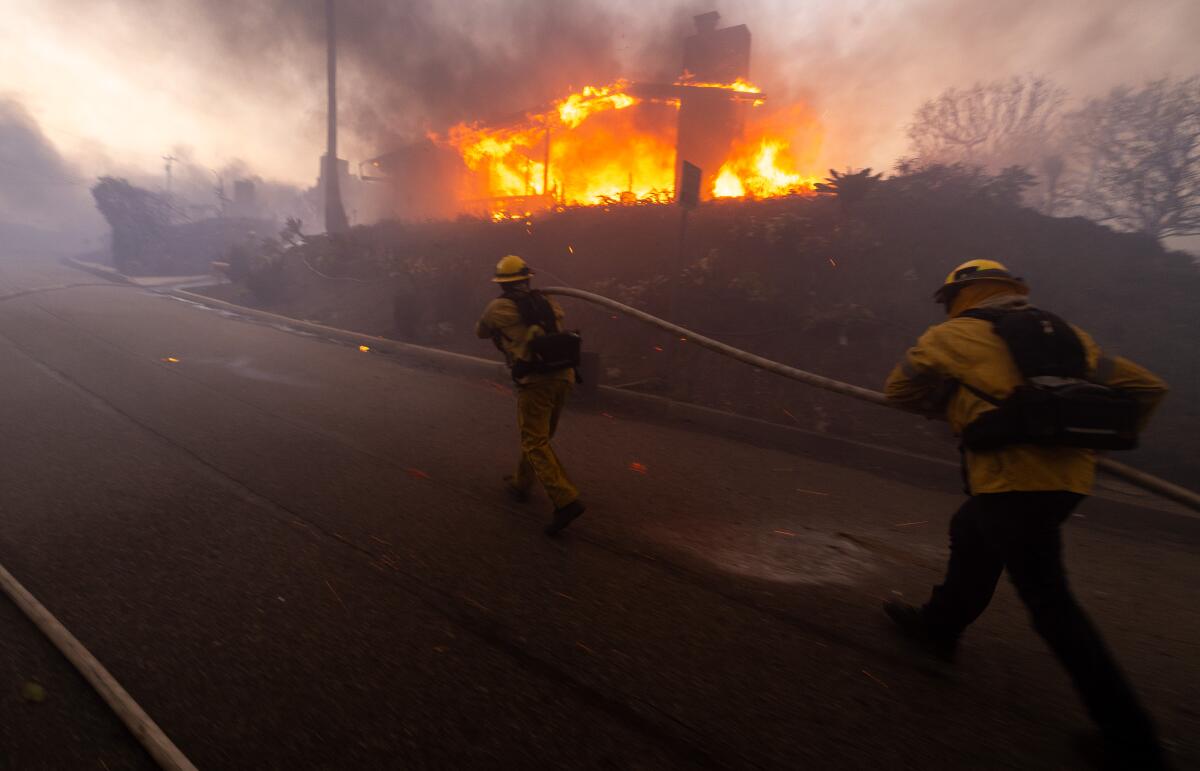
The Palisades Fire, which erupted in January 2025, remains one of the most destructive disasters in California history. According to Cal Fire, it ranks as the state’s third worst, destroying thousands of structures and claiming a dozen lives.
The controversy over the report began swirling months earlier. In November, KNBC revealed that an anonymous letter had been sent to Los Angeles Mayor Karen Bass and City Councilmembers Marqueece Harris-Dawson and Traci Park. The letter accused the LAFD of allowing the same officials involved in managing the fire to supervise the review of their own actions.
Missteps Before the Flames Exploded
Moore also admitted deficiencies in the handling of the Lachman Fire, a smaller brush blaze that ignited on New Year’s Day 2025. That fire, burning in the steep terrain of the Pacific Palisades, was believed to be fully extinguished. Days later, smoldering roots erupted again, triggering the catastrophic Palisades Fire.
“At the time, fire companies were instructed to pick up hose. The department genuinely believed the fire was fully extinguished. That was based on the information, condition and procedures in place at that moment,” Moore said.
A Los Angeles Times review last October shed light on what firefighters experienced on the ground. Text messages revealed that crews were ordered to leave the scene on January 2, even though tree stumps were still hot. Five days later, powerful winds reignited the area, leading to a fast-moving inferno that scorched roughly 7,000 structures.
A Push Toward New Protocols

The LAFD says lessons have been learned. Moore told commissioners that major procedural changes are now in motion, including a stronger emphasis on mop-up operations and the use of advanced drone technology.
“As a result, we’ve already changed our mop-up procedures, and we formally incorporated the use of the drone technology to enhance post suppression verification, situational awareness and detection of residual heat,” he said.
Still, for many residents who lost their homes, these changes arrive long after the damage was done. The admission that key criticisms were softened only deepens the frustration in a community still rebuilding piece by piece.