

An Israeli airstrike tore through a car moving through Gaza City on Saturday, killing senior Hamas commander Raed Saad, a figure long identified by Israel as one of the chief architects of the Oct. 7, 2023, attacks.
Israeli defense officials and local media confirmed the strike targeted Saad directly, marking one of the most consequential Israeli operations since a ceasefire came into force earlier this fall.
Gaza health authorities reported that four people were killed in the attack. At first, there was no immediate confirmation from Hamas or medical teams that Saad was among the dead. That uncertainty did not last long.
IDF Confirms Saad’s Death

Later in the day, an Israel Defense Forces spokesman confirmed Saad’s killing in a social media post, leaving little room for doubt about the target or the message behind the strike.
The post read:
“Every place where we identify that Hamas is trying to regroup, we act. Earlier today, the IDF eliminated Raad Saad, whose elimination constitutes a blow to Hamas’s attempts at regrouping and strengthening. We will not allow our enemies to regroup and rebuild their strength. We will continue to be committed to continuing the ceasefire agreement.”
The confirmation underscored Israel’s position that the ceasefire does not extend protection to senior militant figures attempting to reorganize or rearm.
A High-Profile Hamas Figure
Saad’s death represents the highest-profile assassination of a senior Hamas leader since the ceasefire agreement took effect on Oct. 10.
According to an Israeli defense official, Saad served as the head of Hamas’ weapons manufacturing force, a role central to the group’s military capabilities.
Hamas-linked sources have also described him as the second-in-command of the group’s armed wing, ranking just below Izz al-Din al-Haddad. Before that, Saad led Hamas’ Gaza City battalion, widely regarded as one of the organization’s largest and best-equipped fighting units.
His removal, Israeli officials believe, strikes at the core of Hamas’ ability to rebuild after months of sustained fighting.
War Roots Trace Back to Oct. 7
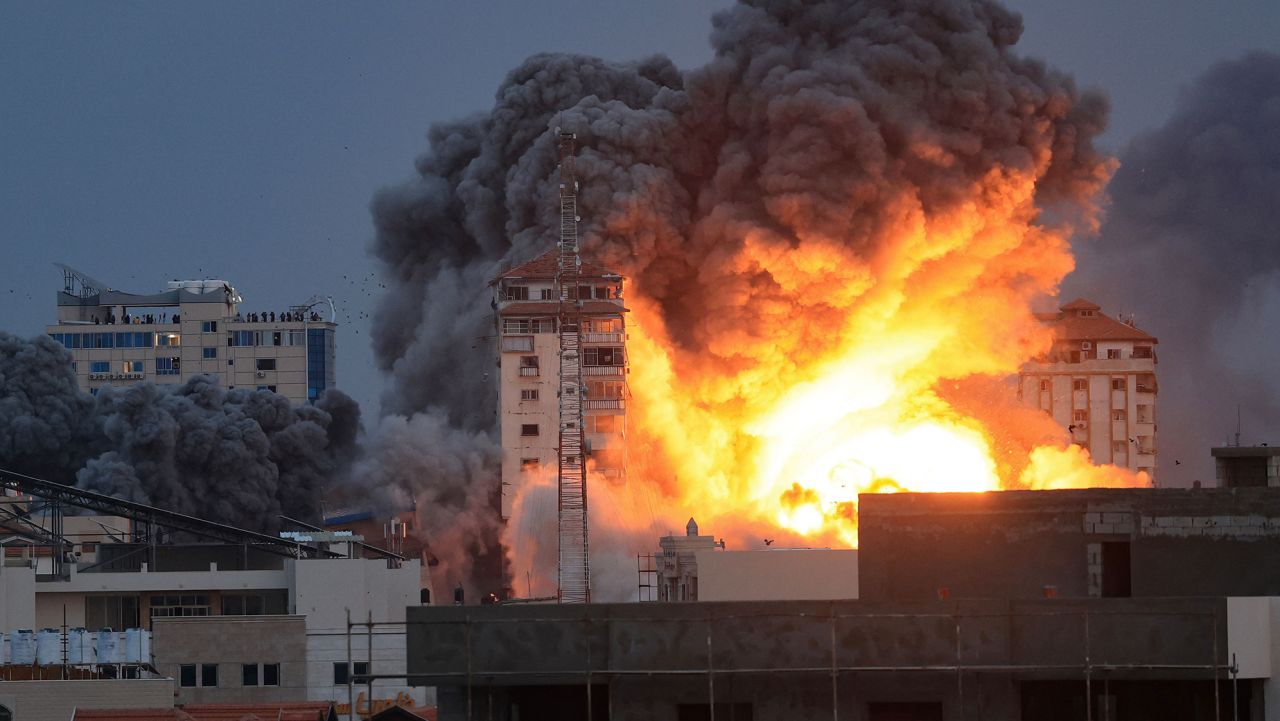
The broader conflict erupted after Hamas-led terrorists stormed southern Israel on Oct. 7, 2023, killing 1,200 people, most of them civilians, and abducting 251 hostages.
That single day reshaped the region and triggered a devastating war in Gaza that has displaced vast numbers of civilians and left much of Gaza City in ruins.
Ceasefire Holds, But Violence Persists
The Oct. 10 ceasefire has allowed hundreds of thousands of Palestinians to return to devastated neighborhoods across Gaza City. Israeli forces have withdrawn from several urban positions, while humanitarian aid deliveries have increased.
Still, the truce has not brought complete calm.
Palestinian health authorities say Israeli strikes have killed at least 386 people in Gaza since the ceasefire began. Israel, meanwhile, reports that three of its soldiers have been killed during the same period and says it has carried out attacks on scores of fighters it claims were violating the agreement.
Saturday’s strike on Saad makes clear that while large-scale fighting may have paused, the shadow war against top militant leaders continues.