

Global Stratalogues and GESDC launch two strategic reports translating digital asset policy and Advanced Air Mobility into scalable, investable infrastructure models.
In early 2026, Global Stratalogues launched two major reports during World Economic Forum week in Davos and at the World Defense Show in Riyadh.
Though focused on distinct sectors—digital asset governance in Davos and Advanced Air Mobility (AAM) in Riyadh—both initiatives advance a common thesis: transformative technologies reach scale only when governance, infrastructure, and capital frameworks evolve in parallel.
A defining feature of both reports was their foundation in roundtables organised with GESDC, reinforcing a structured public–private dialogue focused on implementation rather than theory.
Davos: Digital Assets Move Toward Governance at Scale
Launched during the 9th Annual GBBC Blockchain Central in Davos (19–22 January), Digital Assets Policy Roundtable: A Turning Point for Digital Asset Governance synthesizes insights from a closed-door policy dialogue convened in Singapore under the Chatham House Rule.
By introducing the report in Davos, its findings were positioned within the broader architecture of global economic governance, linking regional regulatory discussions in Asia with international coordination.
Oscar Wendel, Chairman of Global Stratalogues and co-author, summarized the shift:
“Digital assets are no longer about speculation; they are becoming core to identity, access, and economic participation. Governance frameworks must operate at infrastructure scale.”
The report identifies structural fault lines shaping the next phase of adoption: cross-border interoperability, DAO accountability, enforceable governance, AI-enabled compliance integration, and regulatory arbitrage gaps.
A central concept emerging from Singapore was “compliance by design.” Rather than retrofitting controls post-deployment, participants argued that auditability, legal certainty, and supervisory access must be embedded directly into system architecture.
The conclusion was unambiguous: scalable tokenisation depends on enforceable rights and regulatory-grade data integrity. Without these foundations, institutional adoption remains constrained.
Sector examples reinforced this point. David Stybr, President and CEO of BOXO Productions, outlined legally enforceable tokenisation models for rights-driven industries such as film and media, demonstrating how blockchain-based ownership structures can modernise revenue distribution while remaining anchored in established legal systems.
The message in Davos was clear: the question is no longer whether digital asset technology works, but how it is governed, supervised, and integrated into existing financial and legal frameworks.

Riyadh: Advanced Air Mobility as Regulated Infrastructure
In Riyadh, Global Stratalogues launched Advanced Air Mobility in the Gulf at the World Defense Show, positioning AAM within the Kingdom’s broader infrastructure and industrial transformation agenda.
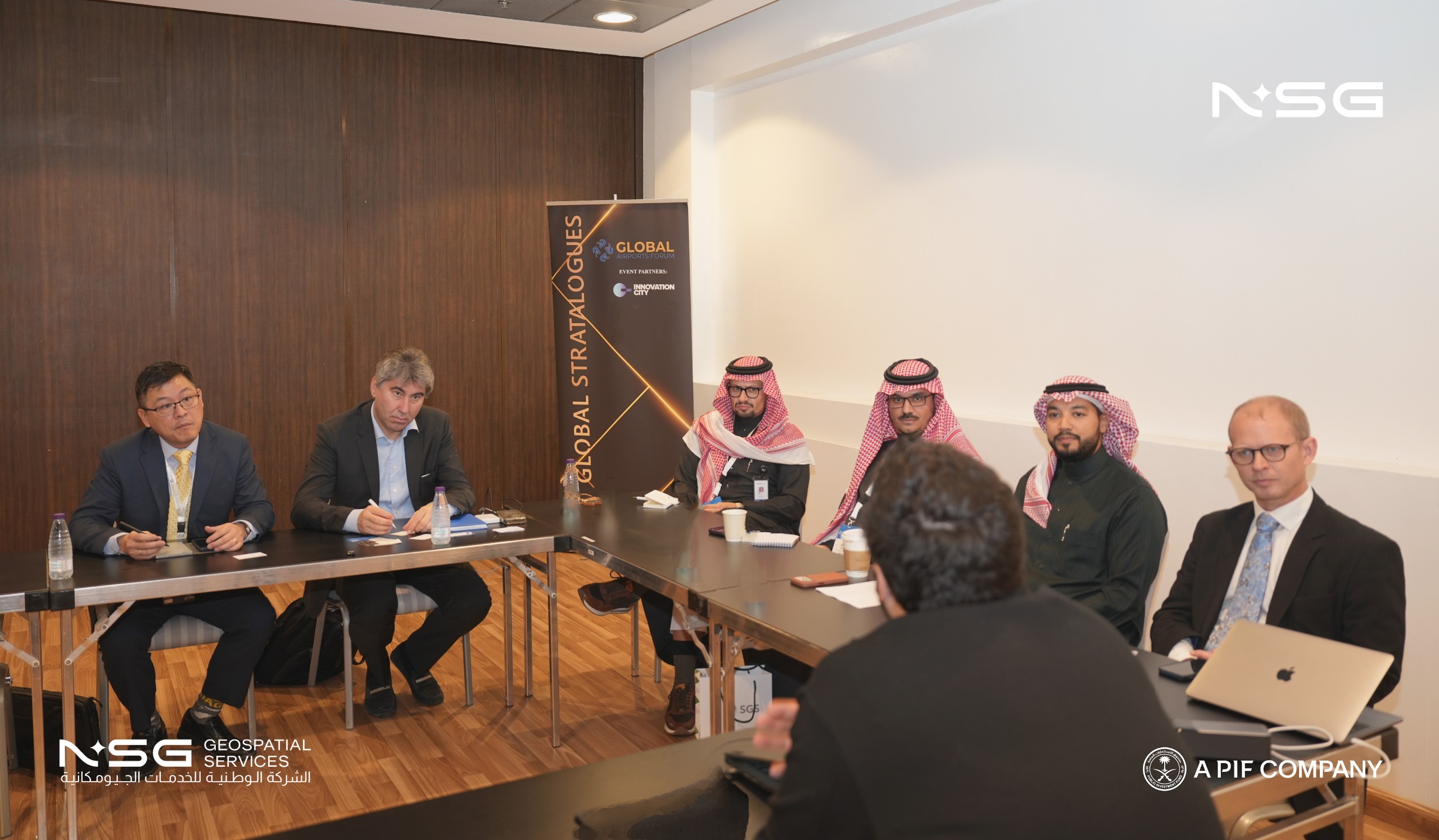
The report captures outcomes from a closed-door roundtable held on 16 December 2025 during the Global Airports Forum. It charts a pathway for transforming AAM “from aspiration into investable infrastructure.”
Moderated by Oscar Wendel alongside Fawaz AlSaleh, Managing Director of Aeronautica, the discussion reframed AAM as a systems-integration challenge rather than a standalone aircraft innovation.
Participants emphasized that viable deployment requires phased corridor pilots, regulatory sandboxes, and structured public–private partnerships to achieve commercial scale while safeguarding safety and public trust.
Hassan Al-Johani, Vice President of Business Development at Neo Space Group, noted:
“The Riyadh discussion reflected a clear move from visionary narratives to practical questions around regulation, infrastructure integration, and commercial viability.”
The report situates Saudi Arabia within the broader GCC ecosystem while identifying the Kingdom’s opportunity to become a reference market for regulated, large-scale AAM deployment aligned with Vision 2030.
Structuring Dialogue for Implementation
In both Singapore and Riyadh, collaboration with GESDC ensured that discussions were structured around governance design, implementation pathways, and capital formation.
Across sectors as different as blockchain-based financial infrastructure and next-generation aviation systems, the methodological consistency was evident.
The dual reports emphasize that governance frameworks must evolve in proportion to technological complexity requiring structural questions to be to confront directly: Who regulates? Who finances? Who integrates? Who bears liability? And how do frameworks move beyond controlled pilots to durable, scalable systems?
As global capital increasingly demands regulatory clarity in emerging sectors, the pattern is clear: innovation without governance plateaus; governance aligned with infrastructure unlocks investment.
Through its launches in Davos and Riyadh, Global Stratalogues signals a deliberate progression—from dialogue to governance, and from ambition to implementation.
About Global Stratalogues
Global Stratalogues is an independent international forum and think tank that convenes senior leaders from government, industry, finance, and academia to support implementation-focused dialogue aligned with national transformation agendas. Previous editions have been held at the UK House of Lords and House of Commons, in Davos, alongside the Qatar Economic Forum, in Venice, Singapore, at the UN in Geneva, and at the French Ministry of Economy in Paris.