

Elon Musk Starshield restrictions have triggered serious concerns in Ukraine after new satellite connectivity limits disrupted military operations and threatened the country’s ability to intercept Russian attack drones.
The unexpected changes reportedly took effect overnight on October 14, 2026, catching Ukrainian forces off guard and prompting urgent efforts to restore vital communications technology.
Elon Musk, whose company SpaceX developed and operates the Starshield satellite system, pointed toward President Donald Trump’s administration and the US military as the authorities responsible for deciding operational limits.
Meanwhile, Ukrainian officials warned that the restrictions could undermine defensive drone missions at a critical moment in the ongoing war against Russia.
The controversy has raised questions about who authorized the changes, why Ukrainian forces received no advance warning and whether the limitations could expose the country to additional Russian attacks.
Elon Musk Says US Military Controls Starshield Restrictions
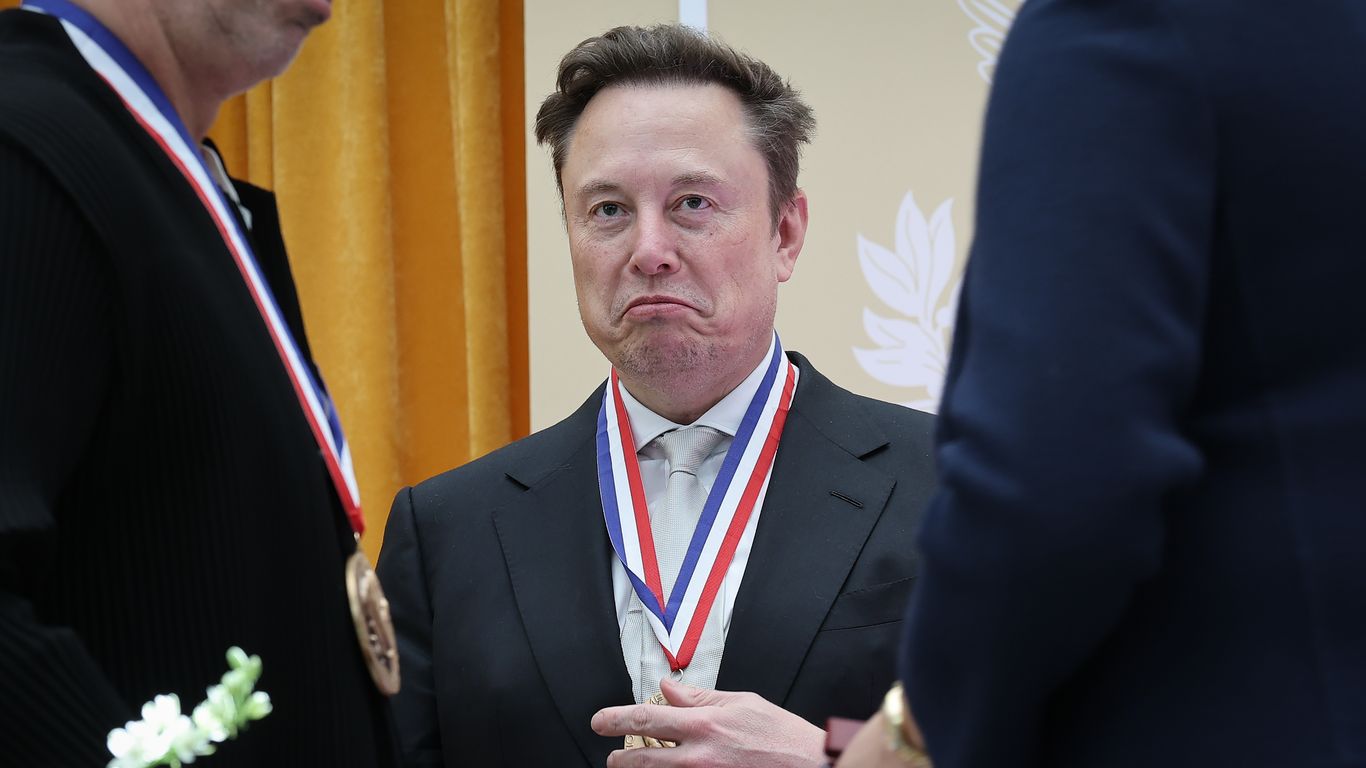
Musk responded to the growing controversy Wednesday by emphasizing the US government’s authority over Starshield’s military operations.
Although SpaceX builds and operates the satellite network, the government owns and controls specific Starshield satellites and supporting infrastructure.
Musk sought to clarify that distinction in a public statement on X.
“Any limits on speed or usage are decided by the US military and ultimately POTUS,” the SpaceX, Tesla and X chief executive wrote.
His remarks placed attention on the Trump administration and Pentagon officials as questions mounted over the disruption to Ukrainian military communications.
However, Musk did not identify the individual responsible for approving the restrictions.
He also did not explain whether Trump, War Secretary Pete Hegseth or another government official personally authorized the change.
Consequently, the precise decision-making process remains unclear.
The existence of a government contract also does not independently establish which party has final authority over every operational setting.
Ukraine Discovers Starshield Speed Restrictions Without Advance Warning
Ukrainian military personnel reportedly learned about the new limitations only after satellite connectivity problems began affecting their operations.
According to a source familiar with the situation, Ukrainian forces received no warning before the restrictions took effect overnight.
Military personnel subsequently contacted SpaceX customer support to determine why their systems were experiencing difficulties.
They were reportedly informed that Starshield connectivity would face restrictions on platforms traveling at speeds of 100 miles per hour or faster.
The restriction translates to approximately 160 kilometers per hour, a threshold that can affect fast-moving military aircraft and unmanned systems.
For Ukrainian forces relying on satellite connectivity during combat, the sudden limitation created immediate operational concerns.
Meanwhile, the country’s existing service arrangements reportedly extend through May 15, 2027, under contracts facilitated by the US government.
Ukrainian officials maintained that their agreements covered land-based fixed and mobile applications, including equipment operating on moving platforms.
The newly introduced speed restriction therefore raised questions about whether previously available capabilities had been unexpectedly withdrawn.
Ukrainian Drone Defense Faces Growing Risk From Connectivity Problems

The restrictions could have significant consequences for Ukraine’s efforts to defend against Russian aerial attacks.
Ukraine increasingly relies on unmanned aircraft to detect, track and intercept incoming drones.
Among the most concerning threats are Russia’s newer jet-powered Shahed attack drones, which can present additional challenges for defensive systems.
Serhii Beskrestnov, an adviser to Ukrainian President Volodymyr Zelenskyy on defense technology, warned that the Starshield restrictions could undermine a crucial defensive capability.
He described the affected technology as “one of our few chances to defend the country” against such threats.
The warning reflects the importance of reliable communications for operators coordinating defensive drone missions.
If satellite connectivity becomes unavailable while an aircraft is moving at operational speed, missions may become harder to complete.
However, the precise impact depends on the aircraft, its communications setup and the particular mission.
Still, Ukrainian officials expressed concern that even temporary disruptions could weaken their ability to respond to incoming attacks.
Ukrainian Military Unit Cancels Missions After Starshield Disruptions
The reported problems have already affected military activities on the battlefield.
Ukraine’s 7th Rapid Response Corps said an unmanned systems unit operating along the Huliaipole front had been forced to cancel missions because of connectivity interruptions.
The disruption was particularly concerning because the unit reportedly experienced problems even when its drones were traveling below the announced speed threshold.
That detail suggested the impact might extend beyond aircraft operating at 100 miles per hour or faster.
Meanwhile, Ukrainian forces began documenting the consequences of the service changes.
The incidents raised questions about whether the restrictions were functioning as intended or creating broader connectivity problems.
The source familiar with the situation also reported performance difficulties involving aircraft operating below the stated limit.
However, the available information does not establish whether those problems resulted directly from the speed restriction or involved additional technical issues.
Ukraine Seeks Full Restoration of Starshield Satellite Connectivity
Hours after the restrictions became public, Ukrainian officials reported progress toward restoring some affected connections.
Former Defense Minister Mykhailo Fedorov announced that service for platforms operating below the threshold was being restored.
“Starlink connectivity at speeds of up to 160 km/h is being restored,” Fedorov wrote on X Wednesday. “Removing Starshield’s speed limit entirely is now critical for Ukraine’s defense.”
His statement indicated that resolving the immediate connectivity problems did not eliminate Ukraine’s concerns about the speed limitation itself.
Meanwhile, Fedorov acknowledged Musk’s involvement and expressed hope that cooperation would continue.
“Thank you, @elonmusk,” Fedorov added.
“We hope for your continued support.”
Ukraine has also contacted SpaceX directly, requesting an explanation for the restrictions and restoration of the capabilities previously available to its military.
According to the source, Ukrainian officials informed the company that the speed limitation had not previously applied to their terminals.
They also warned that the changes were creating serious operational difficulties during the country’s defense against Russia.
As of Wednesday morning, SpaceX reportedly had not responded to Ukraine’s request.
Starshield and Starlink Differences Become Central to Dispute
The controversy has also highlighted the distinction between two satellite communication systems associated with Musk’s company.
Starlink is SpaceX’s commercial satellite internet network, providing connectivity to users through terminals linked to satellites in orbit.
Starshield, by contrast, focuses on national security applications and uses technology developed from the broader Starlink platform.
The US government contracts with SpaceX for Starshield services through the military, including arrangements administered by the Space Force.
Musk emphasized that Starshield’s government-controlled infrastructure differs from commercial Starlink services.
He also maintained that the commercial network cannot be used for offensive military operations.
However, the distinction between the two systems has become important because Ukrainian military capabilities depend heavily on satellite communications.
Ukraine’s concerns involve the restrictions affecting government-contracted services used to support military operations.
Meanwhile, the question of who controls particular technical limitations remains unresolved.
Although the Pentagon maintains a contractual relationship with SpaceX, that relationship alone does not conclusively establish responsibility for the latest speed restriction.
Musk’s Criticism of Zelenskyy Adds Political Tension
The Starshield dispute emerged amid growing friction between Washington and Kyiv over Ukrainian attacks against Russian energy infrastructure.
Days before the connectivity controversy, Musk publicly criticized Ukrainian President Volodymyr Zelenskyy over those operations.
The billionaire wrote on X that Zelenskyy had “gone too far.”
His criticism added political significance to the subsequent Starshield restrictions, particularly as Ukrainian officials sought answers about the sudden disruption.
However, the timing alone does not establish that Musk’s earlier comments influenced the technical changes.
There has also been no public confirmation that Musk personally ordered the restrictions.
The uncertainty has prompted questions about whether operational decisions affecting Ukrainian defense capabilities are being shaped by military considerations, political disagreements or other factors.
For now, the available information does not establish a definitive explanation.
US Senator Questions SpaceX Over Ukraine Defense Disruptions
The controversy has also drawn attention from American lawmakers concerned about Ukraine’s ability to defend itself.
Republican Sen. Thom Tillis of North Carolina publicly pressed SpaceX to clarify whether the company had changed its approach to supporting Ukrainian military communications.
“I’m confident this does not reflect a change in SpaceX policy because if so, intentionally degrading Ukraine’s ability to defend itself might be construed as aiding and abetting a mass murderer. Can you confirm that’s not SpaceX’s intent?”
Tillis’ statement highlighted the potential political consequences of limiting satellite services used in Ukraine’s defensive operations.
His remarks also reflected concern about whether the restrictions might unintentionally benefit Russian military operations.
However, the senator’s comments were framed as a request for clarification rather than evidence that SpaceX deliberately sought to assist Russia.
The incident has nevertheless renewed scrutiny of the relationship between private technology companies, the US government and foreign military partners.
Polish Foreign Minister Confronts Elon Musk Over Restrictions
The dispute extended beyond Washington and Kyiv after Polish Foreign Minister Radislaw Sikorski publicly criticized Musk.
Poland plays a significant role in supporting Ukraine’s satellite communications infrastructure.
According to the supplied reporting, Poland finances more than 2,900 Starlink terminals operating in Ukraine.
Sikorski questioned Musk’s handling of the situation in a sharply worded message on X.
“Hey @elonmusk, big man, are you playing politics with your products again? As your European customers, wea are watching you,” he wrote.
His response underscored concerns among European governments that depend on privately operated communications technology to support Ukraine.
The latest exchange also revived an earlier public disagreement between Sikorski and Musk over Ukraine’s reliance on Starlink.
During that previous confrontation, Musk responded to the Polish official with a personal rebuke.
“Be quiet, small man.”
The history of their disagreements has added another layer of tension to the current dispute.
Meanwhile, European officials continue to face difficult questions about the reliability of communications systems that support military operations but depend on private contractors and government agreements.
Pentagon and SpaceX Face Questions Over Starshield Decision
The Pentagon’s contractual relationship with SpaceX has become a central issue as Ukrainian officials seek to understand the restrictions.
Through Space Force, the US military contracts for Starshield services, giving the government a direct role in administering the relevant agreements.
However, responsibility for the latest operational decision remains unclear.
Musk has attributed speed and usage limits to military authorities and the president, but no publicly identified official has taken responsibility for authorizing the specific change.
The source familiar with the situation said Ukraine had requested an explanation and restoration of previous service capabilities.
Meanwhile, questions remained unanswered about whether the restrictions represented a temporary technical adjustment or a broader change in operational policy.
The Pentagon, White House and SpaceX had not provided a public explanation establishing the reason for the new speed limit in the original October 14 account.
That uncertainty has complicated efforts to assess whether Ukrainian forces can expect their previous level of connectivity to return.
Why Starshield Restrictions Matter for Ukraine’s War Against Russia
Reliable satellite communications have become an essential part of modern military operations.
For Ukraine, connectivity supports activities ranging from battlefield coordination to the operation of unmanned systems.
The new restrictions are particularly concerning because fast-moving aircraft may depend on stable communication links while carrying out defensive missions.
Meanwhile, Russia continues deploying attack drones against Ukrainian targets, increasing the importance of interception capabilities.
Ukraine’s military has already reported canceled missions and connectivity problems linked to the sudden service changes.
Although some connections below the new speed threshold were reportedly being restored, officials continued to seek complete removal of the limitation.
The controversy also highlights the risks associated with military reliance on technology provided through private companies and government contracts.
For Ukraine, the immediate issue is restoring dependable access to the systems its forces already use.
For Washington, the dispute raises broader questions about operational responsibility, communication with partners and the consequences of sudden changes to military technology services.
Ultimately, the Elon Musk Starshield restrictions controversy remains unresolved, with Ukrainian officials warning about serious defense implications while responsibility for the decision has yet to be publicly established.