

Cartel drones are becoming an increasingly serious security concern along the US-Mexico border, with criminal organizations reportedly using unmanned aircraft to monitor American agents, identify patrol patterns and coordinate smuggling operations.
The growing threat has prompted authorities on both sides of the border to expand surveillance capabilities and deploy counter-drone technology. Meanwhile, Mexican security forces have intensified operations against criminal networks using drones for reconnaissance, transportation and increasingly sophisticated attacks.
US military officials recently reported 378 drone incursions along the southern border within a 30-day period. Federal authorities also recorded tens of thousands of unmanned aircraft flights near the border during the past two fiscal years.
However, experts warn that criminal organizations are rapidly adapting their technology, making it increasingly difficult for security agencies to identify and intercept suspicious aircraft.
Mexico has responded by deploying hundreds of military personnel, helicopters and specialized equipment in border regions where drone activity has raised concerns about public safety and organized crime.
Cartel Drones Used to Monitor Border Patrol Agents and Smuggling Routes

Mexican criminal organizations increasingly rely on commercially available drones to gather intelligence on American border security operations.
According to Austin Doctor, a counterterrorism researcher at the University of Nebraska at Omaha, surveillance remains the primary purpose of cartel-operated drones near the southern border.
“On the border, the most common application is surveillance and reconnaissance as cartels look to establish a pattern of life for U.S. security personnel and support smuggling outcomes across the border,” Doctor explained.
Doctor directs strategic initiatives at the National Counterterrorism Innovation, Technology and Education Center and teaches criminology and criminal justice.
His assessment highlights how criminal networks can use relatively inexpensive technology to observe security personnel without placing human scouts in immediate danger.
Drones equipped with cameras can provide an aerial view of patrol routes, crossing areas and security activities.
Meanwhile, the information gathered may help traffickers plan movements and identify opportunities to transport people or illegal cargo across the border.
The growing use of unmanned aircraft represents another challenge for authorities already responsible for monitoring extensive and often remote border regions.
US Military Reports 378 Drone Incursions Near Southern Border
The scale of suspicious drone activity has attracted increased attention from American military officials.
Brig. Gen. Brian Filler of Joint Task Force-Southern Border recently told reporters that the military detected 378 drone incursions during the preceding 30 days.
He also indicated that the number of incidents was increasing.
According to Filler, many of the aircraft were commercially available drones equipped with cameras.
Authorities believe these systems are frequently used to support surveillance activities associated with human trafficking and smuggling operations.
However, not every drone operating near the border necessarily belongs to a criminal organization.
Distinguishing legitimate flights from cartel-controlled aircraft remains an important challenge for enforcement agencies.
Meanwhile, the increasing frequency of reported incursions has encouraged authorities to invest in technology capable of identifying, tracking and potentially disabling threatening drones.
Border Protection Officials Warn of Expanding Drone Security Threats
US Customs and Border Protection has identified unmanned aircraft as a growing concern for national security and border enforcement operations.
A CBP spokesperson outlined the risks associated with rapidly developing drone technology.
“Rapidly advancing Unmanned Aircraft System technology presents persistent threats, including counter-surveillance, illicit cargo movement and potential kinetic attacks.
“Cartels increasingly exploit UAS for surveillance, illicit activities, monitoring law enforcement, scouting crossing points and coordinating smuggling operations. CBP detected over 42,000 near-border UAS flights in (fiscal 2025) and over 37,000 in (fiscal 2026), underscoring the scale of this challenge.
“Under congressional authority (6 USC 124n), the Department of Homeland Security has approved Counter-UAS authorities for CBP. U.S. Border Patrol C-UAS operations, with DHS Secretary approval, cover the entire Southwest border and areas extending 100 miles inland for detection, identification, monitoring, and tracking of UASs. USBP C-UAS operates in all Southwest border sectors to detect, track, and mitigate these threats.”
The figures illustrate the enormous volume of drone activity authorities must monitor across the southern border.
However, the total number of near-border flights should not be confused with the number of confirmed cartel-operated drones.
Even so, officials consider the potential misuse of unmanned aircraft a significant operational threat.
Mexican Cartels Upgrade Commercial Drones for Criminal Operations
Although sophisticated unmanned aircraft are becoming more common, criminal networks still depend heavily on readily available commercial equipment.
Doctor explained that cartels often begin with ordinary drones before modifying them to meet their operational requirements.
“Most cartels and cartel associates still rely on commercial-off-the-shelf drones,” he said.
However, investigators have also observed more advanced systems, including “larger agricultural drone devices.”
Such equipment can offer capabilities beyond those of smaller recreational aircraft, including greater payload capacity.
Doctor warned that criminal groups continue developing more capable systems as authorities expand their defenses.
“Cartels continue to innovate their drone designs, often focused on increasing payload sizes, improving resistance to countermeasures and boosting operational capabilities.”
The evolution of these aircraft reflects how organized criminal groups adapt commercially available technology for increasingly complex operations.
Meanwhile, improved drone capabilities present additional challenges for security agencies attempting to keep pace with rapidly changing threats.
Weaponized Cartel Drones Raise Concerns About Attacks Near US Border
Surveillance and logistical support remain the most frequently identified uses of cartel drones along the border.
However, authorities have also documented the use of weaponized aircraft in violent confrontations inside Mexico.
According to Doctor, some criminal organizations have expanded drone operations beyond intelligence gathering and smuggling.
“Cartels and cartel affiliates use drones for a wide range of tactics and operations. … That includes kinetic attacks on rival factions, civilians in Mexico and local security forces.”
These incidents have raised concerns that tactics already observed in conflicts between criminal organizations could spread into additional border areas.
The Jalisco New Generation Cartel, commonly known as CJNG, has emerged as a significant organization in the development and adoption of drone technology.
Doctor said research conducted through NCITE identified CJNG as “a key driver of drone innovation and adoption within the Mexico cartel ecosystem,” although other criminal groups have increasingly adopted similar tactics.
Drone use has now spread across multiple Mexican states and among different cartel organizations.
Nevertheless, the evidence discussed by researchers indicates that weaponized drone attacks remain more frequently documented inside Mexico than along the immediate international boundary.
Reynosa Drone Seizure Exposes Criminal Technology Stockpiles
A major security operation in Reynosa, Tamaulipas, during 2025 highlighted the equipment criminal organizations may accumulate near the American border.
Mexican soldiers and state police detained a suspect and recovered a collection of drones, explosives and counter-drone technology.
Authorities reported seizing 18 drones, 151 explosive objects, two improvised explosive devices, one drone detector and three devices intended to counter unmanned aircraft.
The discovery demonstrated that criminal groups may possess equipment designed for both offensive operations and protection against aerial surveillance.
Mexico’s security cabinet did not publicly identify the cartel responsible for the seized materials.
However, Doctor said the location “was reported as linked to the Los Metros faction of the Gulf Cartel.”
The seizure provided a significant example of the equipment associated with criminal drone operations in a border region.
Still, the available information did not establish how many of the seized aircraft had previously participated in attacks or smuggling activities.
Tijuana Drone Attack Demonstrates Threat to Mexican Security Facilities
Concerns about weaponized drones intensified following an October 2025 attack against a prosecutor’s office in Tijuana, Baja California.
Mexican authorities reported that an unmanned aircraft dropped homemade explosive devices on a facility responsible for investigating kidnapping cases.
The attack damaged four vehicles but caused no reported injuries.
Prosecutors characterized the incident as criminal retaliation, although they did not publicly identify the organization responsible.
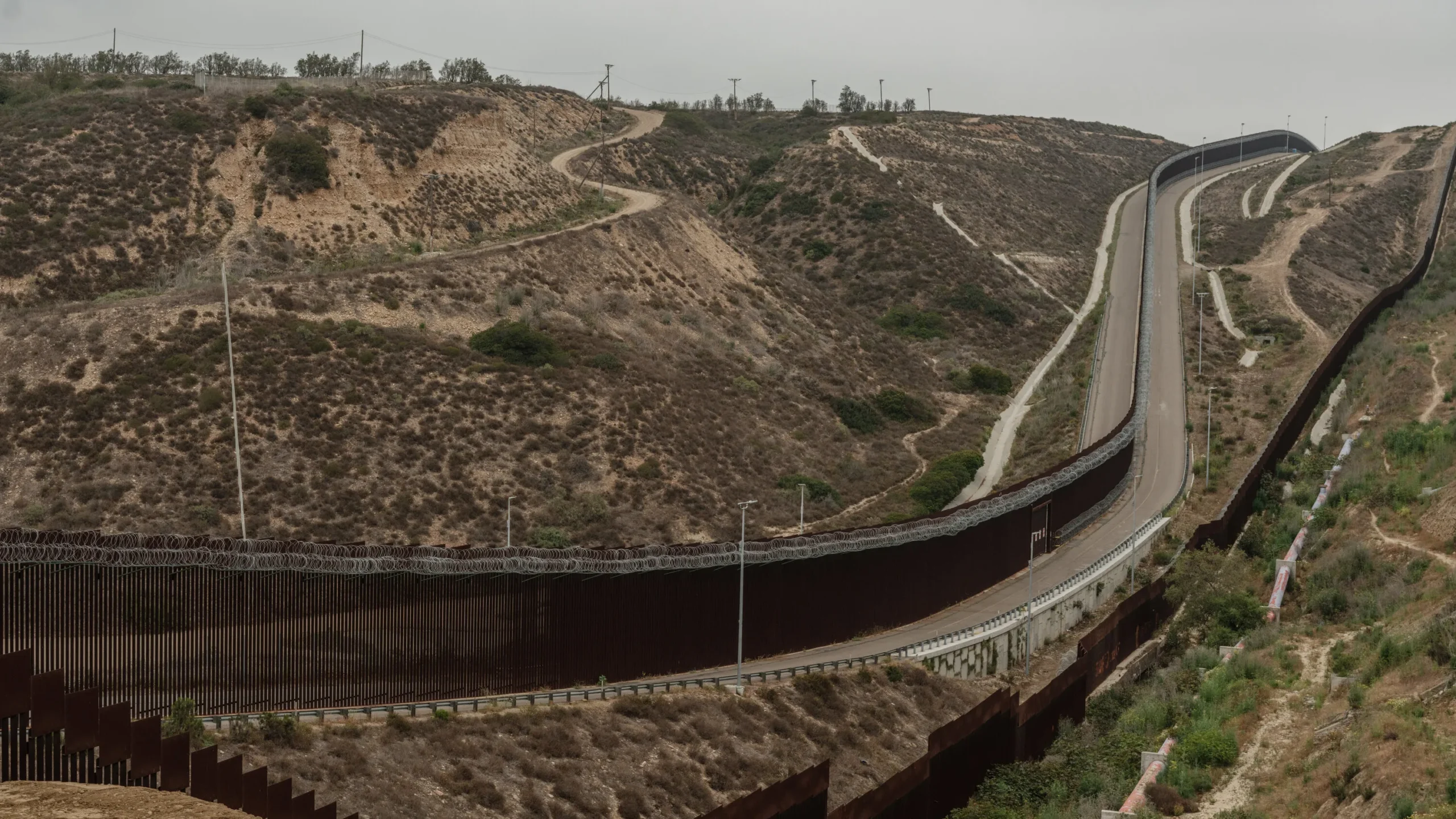
The location was particularly significant because Tijuana sits directly across the international border from San Diego, California.
Doctor identified the incident as an exception to the more common pattern of weaponized drone attacks occurring farther inside Mexico.
He described border areas as “critical facilitation hubs,” while warning that the possibility of more attacks involving explosive-equipped drones “remains credible.”
The incident reinforced concerns that technologies used by criminal organizations elsewhere in Mexico could create additional security risks near American communities.
Mexico Launches Counter-Drone Operations Along Tijuana-San Diego Border
Mexican authorities have expanded their response through military operations, surveillance equipment and targeted interdictions.
During the Águila Alta operation in the Tijuana-San Diego region in September 2026, Mexican defense officials reported neutralizing five drones.
Security forces also detained one person and seized a firearm, magazines and ammunition.
In one instance, authorities initially detected an aircraft on the American side of the border before Mexican forces subsequently neutralized it.
Officials said information shared with US Customs and Border Protection helped support the response.
The operation demonstrated growing cooperation between American and Mexican security agencies confronting cross-border drone threats.
However, Mexican officials did not release comparative data showing whether suspicious drone activity declined after the operation.
As a result, the long-term effectiveness of the campaign remains difficult to assess.
Mexico Deploys 500 Troops and Helicopters to Tamaulipas Border Region
Mexico has also expanded its military presence in Tamaulipas as part of broader efforts to confront drone-related threats and organized crime.
Earlier in October 2026, authorities deployed 500 soldiers and National Guard members across five municipalities.
The deployment included two helicopters, drones and both mobile and fixed counter-drone systems.
Separately, the Mexican Navy announced additional resources under Operation Sable.
That deployment included 159 personnel, 11 vehicles and two drones.
The operations reflect an effort to combine traditional security measures with equipment designed specifically to detect and counter unmanned aircraft.
Meanwhile, Mexican authorities have strengthened the legal framework governing criminal drone activity.
Legislation introduced in 2024 made certain drone-related offenses federal crimes, including using aircraft to drop explosives, modifying them to transport weapons or drugs and conducting surveillance of public officials.
These measures give prosecutors additional legal tools when pursuing individuals involved in criminal drone operations.
Pentagon Expands Technology to Detect and Counter Cartel Drones
The United States has also increased its focus on counter-drone defenses along the southern border.
Military and homeland security agencies are using multiple layers of monitoring and detection equipment to identify potentially dangerous aircraft.
A Department of War spokesperson said Joint Task Force-Southern Border, Customs and Border Protection and the Department of Homeland Security coordinate systems designed to “observe, evaluate and, if needed, engage threats.”
The approach combines surveillance capabilities with procedures for assessing whether a drone poses a threat that requires intervention.
Meanwhile, US Border Patrol counter-drone operations now cover all Southwest border sectors.
Federal authorization also supports detection, identification, monitoring and tracking in designated areas extending up to 100 miles inland.
The growing investment reflects concerns that unmanned aircraft could compromise enforcement operations, transport illicit cargo or eventually support more violent activity.
However, technology alone may not eliminate the threat posed by criminal groups willing to adjust their methods.
Experts Warn Cartel Drone Threat Will Continue Evolving
Despite increased deployments and technological investment, major questions remain about the scale and effectiveness of cartel drone operations.
Authorities have not established the exact number of unmanned aircraft directly controlled by criminal organizations.
It also remains unclear which cartels operate individual drones detected near the border.
Similarly, publicly available information does not yet demonstrate whether Mexico’s expanded counter-drone operations have significantly reduced criminal activity.
Doctor believes additional counter-drone resources can improve security, but he cautioned against expecting criminal organizations to abandon the technology.
He warned that “it is almost certain that cartels will continue to innovate and adapt.”
That assessment reflects a broader challenge facing security agencies as criminal networks gain access to increasingly affordable and capable unmanned systems.
For American and Mexican authorities, the task involves more than simply detecting drones in restricted areas.
They must also determine which aircraft pose genuine threats, identify the criminal networks controlling them and respond effectively without disrupting legitimate aviation activity.
Ultimately, the growing use of cartel drones has introduced another layer of complexity to border security, forcing both countries to adapt as organized crime adopts increasingly advanced technology.