

A tense moment unfolded during a California school board meeting last month when a district leader took issue with a single word used in an official presentation. What followed was a pointed exchange over language, respect, and how schools report on vulnerable students.
At the center of the dispute was Pajaro Valley Unified School District Board Vice President Joy Flynn, who objected to the term “homeless” during a public report on student achievement. Instead, she said, the district should use the word “unhoused.”
Clash Over Language During Public Meeting
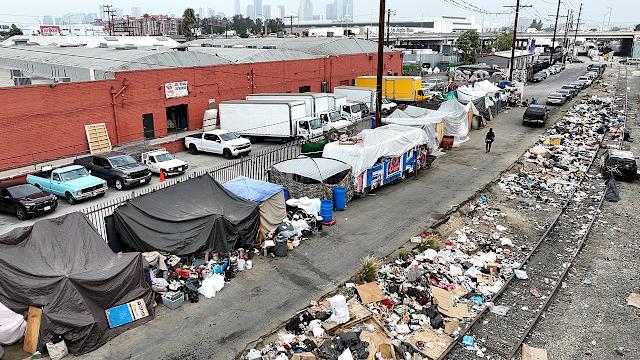
The exchange took place during a Jan. 14 meeting, after Assistant Superintendent of Educational Services Michael Berman delivered a “Report on Student Achievement.” During the presentation, Berman referred to a group of students as “homeless.”
Once the public comment period ended, Flynn addressed the board.
“I have a lot to say and I will speak plainly. And you may not like it. I am personally offended by what was presented. On so many different levels,” Flynn said.
She later clarified her concern, stating, “One thing I would like to see updated is the word homeless to unhoused.”
However, another board member quickly pushed back, noting that the terminology is aligned with state standards. As the discussion continued, tensions rose.
“I’m not done,” Flynn said to the school board member defending the staff member who used the word “homeless.”
The board member responded, “I just don’t want Mr. Berman [the staff member] to … for this to be on him. That’s the way our state of California, that’s the language that they use. And that’s their reporting.”
Flynn did not back down.
“That doesn’t mean that’s the language we have to use,” Flynn said.
She went on to explain her broader concern with how language reflects respect for the community.
“I’m just making a statement, and I’d like to have my time to finish. I understand that. I recognize that you’re using the information that was given to you, that you researched, and I’m asking that it be updated,” Flynn said. Flynn explained further, “And it is just because that’s the way that everybody else does it doesn’t mean that’s the way we need to do it. It’s a respectful term to speak about our community.”
Student Data and Suspension Disparities
Meanwhile, Berman’s report relied on the California School Dashboard to assess performance across various student demographics. The presentation included data on foster youth, students with disabilities, graduation rates, chronic absenteeism, and suspension levels.
One data point drew particular attention.
“One thing I want to call out is we see only one group in red, and it’s our Black and African-American students. This is a big problem. You may have noticed that this is the first time we’ve seen our Black students in any of these indicators,” Berman said.
The dashboard marks categories in red when they are considered “very high.” According to the report, Black students had the highest suspension rates in the district. Notably, the district population is more than 85 percent Hispanic and 13 percent White, while Black students account for less than 1 percent.
Berman explained why Black students did not appear under other indicators.
“We have a lot of work to do, and this data point is significant,” Berman said.
He noted that there were not enough Black students to register as “statistically significant” under some state measures such as graduation rates and “college and career” readiness categories.
Flynn objected strongly to that explanation.
“I recognize that in this report that I think that something was said was there aren’t enough Black students to have statistical significance. I’m personally offended by that. If we have one Black student, that student is statistically significant enough to be on the report.”
Broader Reaction and Ongoing Debate

The discussion has since drawn attention beyond the district.
The North American Values Institute, an organization that tracks education policy nationwide, weighed in on Flynn’s comments.
“Changing language that functions to help us understand urgency and truth—in order to reduce stigma, cater to feelings, and be ‘politically correct’—is a dangerous path. In the case of K-12, it could inadvertently lead to decisions that direct resources or interventions away from the students who need them most,” a spokesperson said.
Neither Flynn nor Pajaro Valley Unified School District responded to a request for comment following the meeting.
Still, the exchange highlights a broader cultural debate playing out in schools across the country. How much does language matter? And when official reporting terms clash with evolving social norms, who decides what words should be used?
For now, the board’s public disagreement underscores just how powerful a single word can be.