

JPMorgan Chase Chairman and CEO Jamie Dimon is urging New York City Mayor Zohran Mamdani to focus on making the city safer, more competitive and more attractive to businesses, workers and families.
Dimon said he plans to judge Mamdani by what the new mayor actually accomplishes rather than by campaign rhetoric. The warning comes as Mamdani faces pressure from Wall Street over his proposals to raise taxes on wealthy New Yorkers and reshape the city’s economic policies.
Dimon Challenges Mamdani To Make New York Competitive
Speaking Thursday in a Bloomberg TV interview, Dimon emphasized that major cities constantly compete for businesses, workers and investment.
“Every city has to compete. And they have to compete at every level – arts, science, schools, that is what it is. I’m not inventing that, he can be an ideologue, he has to compete, too,” Dimon said Thursday in a Bloomberg TV interview.
The JPMorgan chief said Mamdani’s administration will ultimately be judged by whether New York becomes a place where people want to build their lives and businesses.
“And we’ll see: will he learn that he’s got to make this city a place where people want to grow and build and live and have families and work?” he continued. “And he’s gotta compete with Shanghai and Hong Kong and Singapore and Nashville, and people vote with their feet. So it isn’t this morality thing that people talk about. It’s like, are you building a great city with lower crime and stuff like that?”
Dimon’s comments followed a high-profile meeting with Mamdani at JPMorgan’s new Manhattan headquarters.
Wall Street Meeting Focused On New York’s Future
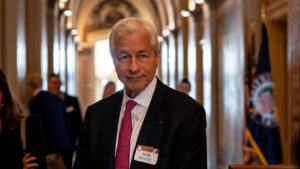
Dimon and Mamdani met Monday as the mayor stepped up his outreach to prominent Wall Street figures following criticism of his plans targeting high-income New Yorkers.
The meeting was “constructive and the tone was friendly,” a JPMorgan spokesperson told Reuters.
City Hall said the discussion included efforts to reduce government waste, cut red tape surrounding development and expand public-private partnerships. The bank said New York City’s broader competitiveness also featured prominently in the conversation.
Dimon made clear that Mamdani’s performance, rather than his political messaging, would determine his assessment.
“I don’t care what he says. What does he do? I will judge that,” Dimon said. “And so what actually happens, because you can talk about morality and ideology all you want, but if things don’t get better, you didn’t do a good job… And so, hopefully, he’ll learn. I want him to do a good job. I’m not against him.”
That distinction could prove significant as Mamdani attempts to balance progressive economic policies with the demands of a city heavily dependent on financial services and private investment.
Dimon Questions Meaning Of ‘Fair Share’
Dimon also addressed Mamdani’s proposals involving taxes on wealthy residents.
“The CEO also expanded on Mamdani’s controversial wealth tax proposals: “I don’t think… people making under a certain amount [should] pay taxes at all. I would agree with that, but when they say, ‘fair share,’ what do they mean? They should give a number.””
The JPMorgan chairman argued that New York already faces a competitive disadvantage because of its tax environment.
He pointed to JPMorgan’s workforce as an example, noting that the company now has more employees in Texas than in New York City.
According to Dimon, about 26,000 JPMorgan employees are based in New York City, compared with 33,000 in Texas.
Dimon Points To Texas As A Warning
Dimon said other cities actively compete for corporate investment rather than assuming businesses will remain regardless of policy.
“The Dallas mayor calls up all the time saying, ‘What can I do to help you? I have land over here,’ you know, and that is pro-business and pro-people-love-living there,” he said.
He contrasted that approach with policies he believes can discourage businesses and workers from staying in New York.
“New York’s a wonderful place too, but… [people] think that somehow being anti-business is going to help a city. It’s not.”
For Dimon, the issue extends beyond tax rates. He argued that crime, quality of life, development, schools and economic opportunity all contribute to whether people choose to remain in a city.
Mamdani now faces the challenge of turning his political agenda into policies that can satisfy his progressive base while keeping New York attractive to employers, investors and families.
The coming months will show whether the mayor can deliver the economic growth Dimon says the city urgently needs, while maintaining the policy priorities that helped propel him into City Hall.