

After weeks of behind-the-scenes diplomacy, President Donald Trump and Ukrainian President Volodymyr Zelenskyy say a peace agreement to end the war in Ukraine is edging closer to reality. Still, they caution that some of the most sensitive issues remain unresolved.
Speaking to reporters following their meeting at Mar-a-Lago in Florida, both leaders described significant progress on a detailed framework while acknowledging that territorial disputes, ceasefire terms, and domestic approval inside Ukraine continue to pose serious challenges.
Momentum Builds Around a 20-Point Framework
Trump said negotiations have accelerated sharply over the past month, suggesting the talks are further along than at any previous point in the conflict. While optimism was evident, he stressed that a final deal depends on resolving a small number of deeply complex questions.
“We could be very close,” Trump said. “There are one or two very thorny issues, very tough issues. But I think we’re doing very well. We made a lot of progress today, but really, we’ve made it over the last month. This is not a one-day process. It’s very complicated stuff.”
The discussions, according to both leaders, followed weeks of intensive coordination involving U.S., Ukrainian, European Union, and NATO officials. Those efforts, they said, have brought a potential peace deal close to the finish line.
Zelenskyy Confirms Major Progress Across Multiple Talks
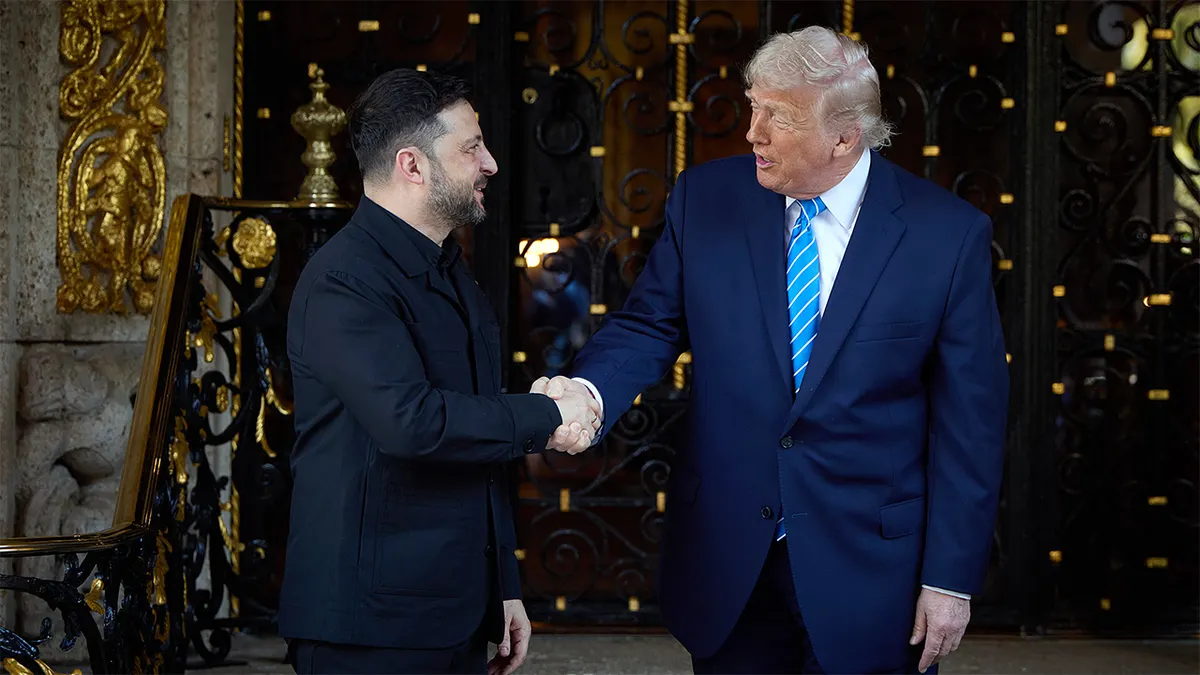
Zelenskyy echoed Trump’s assessment, confirming that negotiators have reached broad agreement on most elements of the plan. He credited sustained diplomacy across several international meetings for pushing the process forward.
Talks have unfolded over recent weeks in cities including Geneva, Miami, Berlin, and Palm Beach, with American and Ukrainian teams working toward a shared framework.
“We discussed all the aspects of the peace framework, which includes – and we have great achievements – a 20-point peace plan, 90% agreed,” Zelenskyy said.
Europe and NATO Remain Closely Involved
Both leaders emphasized that European and NATO officials have been deeply involved throughout the process. Following the Florida meeting, Trump and Zelenskyy participated in a joint call with senior leaders from across Europe and key international institutions.
Zelenskyy said negotiating teams are expected to reconvene in the coming weeks to address remaining issues. He added that Trump has agreed to potentially host further talks in Washington, bringing European leaders and a Ukrainian delegation back to the table.
Territory Emerges as the Hardest Obstacle
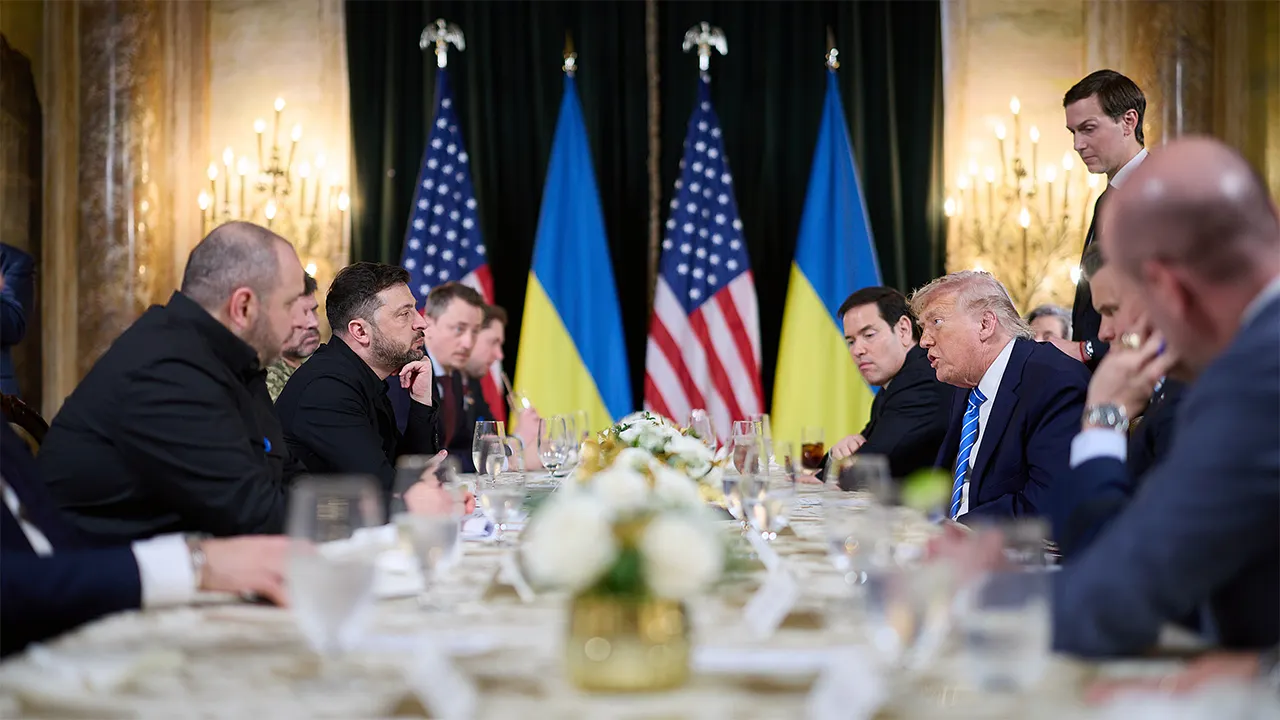
Despite the progress, the question of territory, particularly the status of Donbas, remains the most difficult hurdle. Trump and Zelenskyy acknowledged that Ukraine and Russia continue to hold sharply different positions.
Trump warned that time may not be on Ukraine’s side, suggesting that continued fighting could alter realities on the ground if talks drag on.
“Some of that land has been taken,” Trump said.
“Some of that land is maybe up for grabs, but it may be taken over the next period of a number of months. Are you better off making a deal now?”
His remarks underscored the urgency driving the negotiations and the pressure to reach an agreement before further losses occur.
Any Deal Must Reflect Ukraine’s Will
Zelenskyy made clear that even if negotiators finalize the framework, any agreement must align with Ukrainian law and the will of the people. That process, he noted, could require parliamentary approval or even a national referendum.
“Our society, too, has to choose and decide who has to vote, because it’s their land – the land not of one person,” Zelenskyy said. “It’s the land of our nation for a lot of generations.”
Trump Points to Public Support and Human Cost
Trump said polling shows strong public support for ending the war and reiterated his personal motivation for pushing the talks forward. He pointed to the immense human toll of the conflict, calling it a driving force behind his efforts.
“We want to see it ended,” Trump said. “I want it ended because I don’t want to see so many people dying. We’re losing massive numbers of people – the biggest by far since World War II.”
For now, both leaders say the outlines of peace are visible, but the final stretch may prove the hardest. Whether those remaining “thorny issues” can be resolved will determine if months of diplomacy finally deliver an end to the war.