

South Florida’s rare blast of Arctic air did more than send residents scrambling for jackets. It sent thousands of invasive iguanas tumbling from treetops, stiff and motionless, across neighborhoods unaccustomed to winter cold.
In just two days, state wildlife officials say more than 5,000 cold-stunned reptiles were rounded up and removed, marking one of the largest coordinated iguana collection efforts in Florida history.
The Florida Fish and Wildlife Conservation Commission confirmed that 5,195 invasive green iguanas were collected during a temporary two-day exemption that allowed residents and visitors to capture the immobilized reptiles without a permit.
Emergency Order Opened The Door
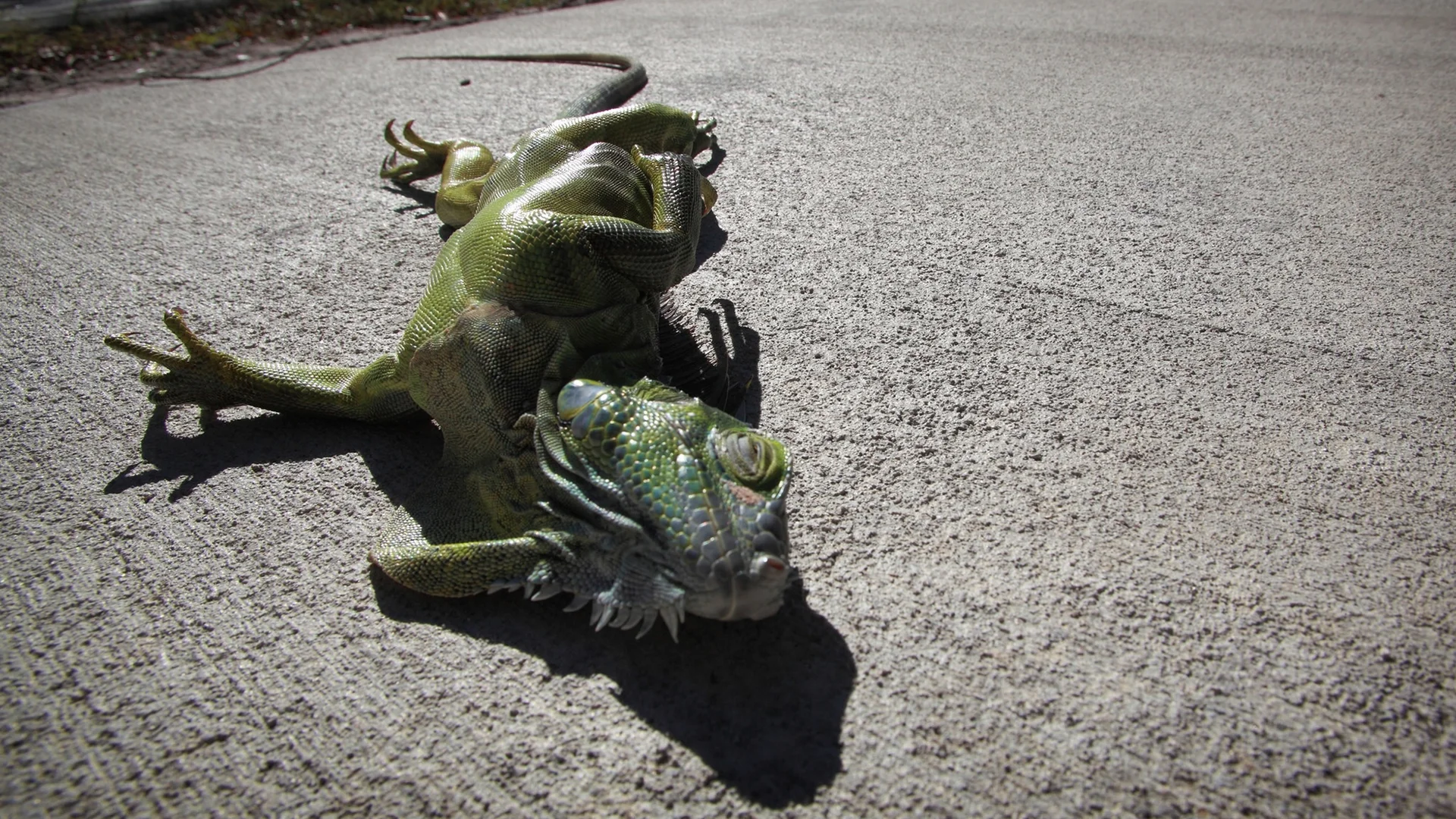
Under special regulations issued through an executive order, people were permitted to remove live, cold-stunned iguanas from the wild without the usual transportation permit, but only on Feb. 1 and Feb. 2.
Meanwhile, wildlife staff set up four designated drop-off points across South Florida to manage the surge.
Of the 5,195 iguanas collected, a staggering 3,882 were brought to the FWC’s Sunrise office, roughly 13 miles west of Fort Lauderdale. Another 1,075 were turned in at the Tequesta location, about 24 miles north of West Palm Beach.
In contrast, the Florida Keys site received 215 iguanas, while just 23 were collected in Fort Myers along the Gulf Coast.
Florida wildlife officials said 5,195 iguanas were collected during the two-day exemption of the state’s law requiring permits to transport the reptiles.
‘Coordinated Efforts’ Made It Possible
Roger Young, executive director of the FWC, credited teamwork for the unprecedented numbers.
“The removal of over 5,000 of these nonnative lizards in such a short time span was only possible thanks to the coordinated efforts of many staff members in multiple FWC divisions and offices, our partners and, of course, the many residents that took the time to collect and turn in cold-stunned iguanas from their properties,” Young said at a Feb. 4 meeting in Tallahassee.
FWC staff coordinated the transfer of collected iguanas to permit holders, including some destined for sale outside the state. Any reptiles that could not be transferred were humanely killed by trained staff.
Why Iguanas Are Targeted In Florida
Green iguanas are listed as a prohibited species in Florida, largely because of their documented damage to infrastructure and ecosystems.
Green iguanas are a prohibited species in the Sunshine State because of their “negative impacts on Florida’s environment and economy,” Young said.
They burrow into canal banks, seawalls and foundations. They leave droppings across docks, porches and even swimming pools. Over time, those burrows can destabilize structures, especially in waterfront communities.
“In cleared habitats such as canal banks and vacant lots, green iguanas reside in burrows, culverts, drainage pipes and rock or debris piles,” according to the FWC.
“South Florida’s extensive man-made canals serve as ideal dispersal corridors to further allow iguanas to colonize new areas.”
Because they are invasive, iguanas may be humanely killed on private property and are not protected except under anti-cruelty laws.
Freeze Conditions Broke Century-Old Records
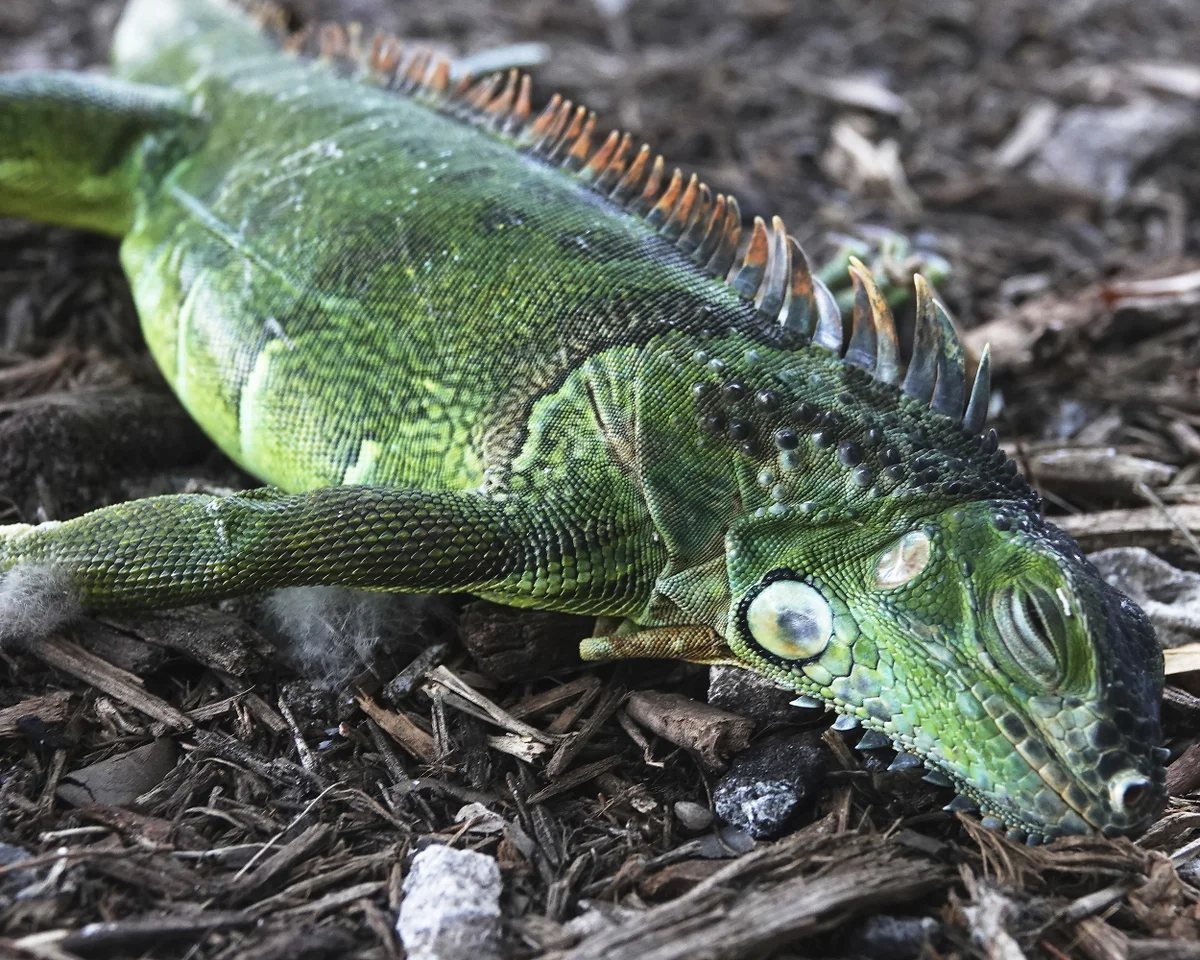
The sudden freeze that made the roundup possible was historic.
Low temperatures in Miami plunged to 35 degrees on Feb. 1. Meanwhile, West Palm Beach recorded 30 degrees, breaking records for that date set in 1909, according to National Weather Service data.
When temperatures dip that low, iguanas lose muscle control. They enter a temporary state of paralysis, often called torpor, and fall from trees appearing lifeless.
However, appearances can be deceiving.
“If you encounter a cold-stunned green iguana, you should never bring it into your home or building to warm up,” according to the FWC’s news release.
“Iguanas can recover from cold-stunning more quickly than you may expect — and, once recovered, can act defensively, with long tails that whip and sharp teeth and claws.”
Green iguanas were first reported in South Florida in the 1960s. Since then, their population has expanded rapidly, aided by warm weather and sprawling canal systems.
Roundup Now Closed
For now, the emergency window has shut.
The FWC is no longer accepting live iguanas from the public, officials said, signaling an end to the brief but intense freeze-driven crackdown.
Still, the episode underscores a broader reality. Invasive species management in Florida often hinges on unpredictable weather events. This time, a historic cold front created a rare opportunity, and thousands of reptiles were removed in just 48 hours.