

A new push by federal regulators to speed up wireless expansion has triggered fierce criticism from Children’s Health Defense, which argues the proposal would erase community oversight and exceed the government’s legal authority. The organization urged the Federal Communications Commission to abandon the initiative in formal comments submitted on Dec. 31, 2025, and to instead comply with a court mandate dating back to 2021 that requires the agency to revisit its decades-old radiofrequency safety limits.
CHD Says FCC Is Ignoring Court Orders
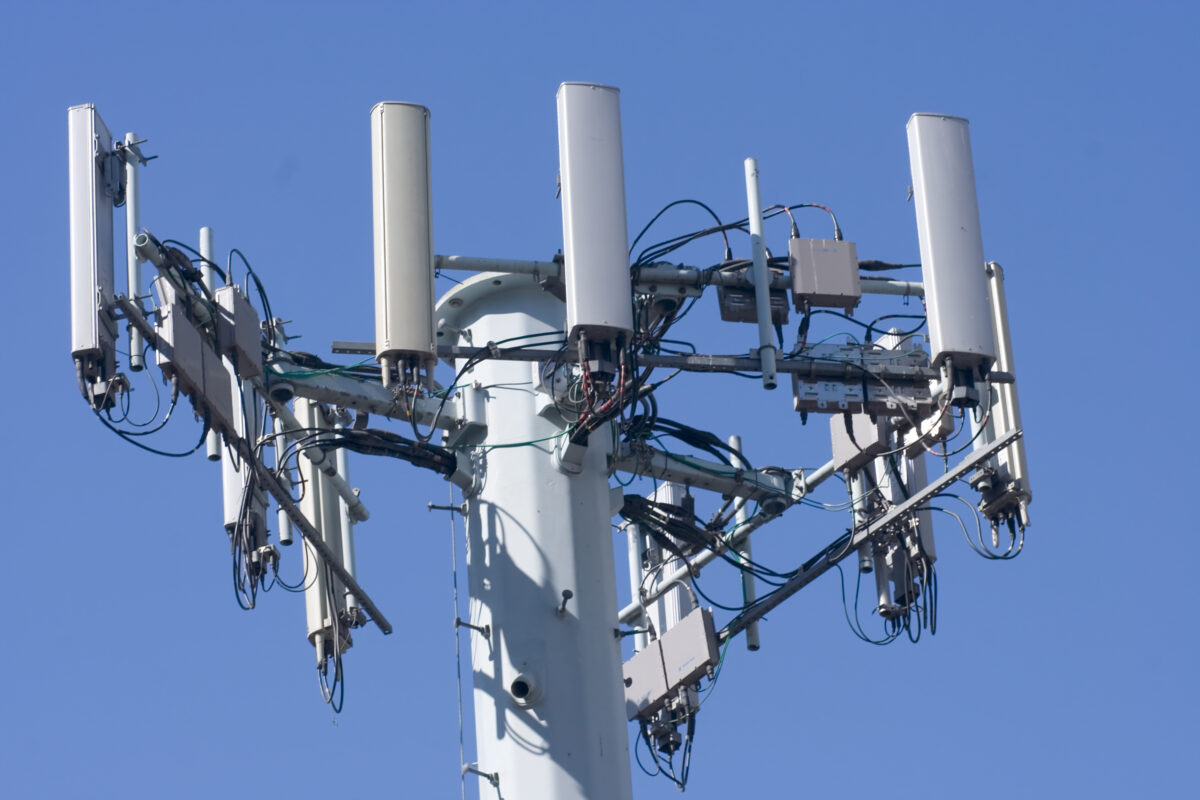
The FCC introduced the proposal on Sept. 9, 2025, framing it as a move to “eliminating barriers to wireless deployments.” The plan would restrict local governments from intervening when telecom companies attempt to place new cell towers near homes, schools, or other sensitive locations.
According to Children’s Health Defense, the agency’s effort is a “misguided” diversion from its clear obligation to revisit the health basis of its current safety standards. Those limits, unchanged since 1996, have been under scrutiny since a major courtroom win for CHD in August 2021.
Scott McCollough, CHD’s lead attorney for Electromagnetic Radiation and Wireless cases, said the agency is focusing on the wrong priorities. “What the FCC must do is tend to the 2021 DC Circuit Court’s remand requiring them to address health and environmental effects,” he told The Defender.
The 2021 ruling from the U.S. Court of Appeals for the District of Columbia found the FCC failed to consider extensive non-cancer evidence of potential harm associated with wireless radiation. The court ordered the agency to re-evaluate the scientific record, explain its conclusions, and determine whether its rules still protect public health.
The panel also instructed the FCC to “(ii) address the impacts of RF radiation on children, the health implications of long-term exposure to RF radiation, the ubiquity of wireless devices, and other technological developments that have occurred since the Commission last updated its guidelines, and (iii) address the impacts of RF radiation on the environment.”
Despite petitions in 2023 and 2025 urging action, the FCC has not complied.
Critics Say New Rules Would Silence Local Communities
Instead of responding to the court, critics say the agency is moving in the opposite direction. The new proposal would streamline tower approvals and grant telecom companies unprecedented power to install equipment, even if a community objects.
Miriam Eckenfels, director of CHD’s EMR and Wireless Program, said the agency’s direction is alarming. “This is the most aggressive push we’ve ever seen to override local zoning, erase public participation and force dense wireless infrastructure into residential areas under the guise of streamlining wireless infrastructure deployment,” she said.
Around 50 organizations and an additional 50 individuals signed on to CHD’s filing.
‘If the wireless company wants a tower, it will get that tower’
CHD argued that the FCC’s plan would force communities to accept a sweeping, rapid buildout of wireless equipment regardless of aesthetics, property values, safety concerns, or neighborhood character.
Some proposed measures, the group said, would violate both the Communications Act and the U.S. Constitution.
McCollough warned the consequences would be drastic. “If the FCC does what it is proposing, then local permitting will become a sham,” he said. “The zoning authorities won’t have much remaining control over placement, modification or construction of cell towers.”
He said the public process would become meaningless. “The process will be a mere ministerial rubber-stamp exercise. If the wireless company wants a tower, it will get that tower.”
Public Has Until Jan. 15 to Weigh In
The FCC closed its initial comment period on Dec. 31, 2025, but reply comments remain open until Jan. 15.
Eckenfels urged residents to speak up.
“We need to show there’s massive public opposition,” Eckenfels said.
CHD published a step-by-step template to help people file responses and notify local officials. When a coalition of municipalities asked for an extended deadline due to the holiday season, the FCC refused. According to McCollough, that decision suggests the agency intends to move quickly.
CHD Warns of Legal Action if FCC Moves Forward
In its formal comments, Children’s Health Defense also attached a Nov. 25, 2025, motion pressing the FCC to work with the U.S. Department of Health and Human Services to establish radiation limits that actually reflect current science.
Eckenfels said the message to the FCC was clear. “The document essentially tells the FCC to either protect people, or get out of the way and let other federal agencies, like HHS, set health and safety limits for wireless radiation exposure.”
She added that the filings serve an important purpose. They show that CHD is giving the agency every opportunity to comply with the court order before returning to litigation. “Because before we can go back to the D.C. Court and complain that the FCC hasn’t complied, we have to show that we’ve tried telling the FCC that they need to do what the court asked,” she said.
If the agency continues to delay, CHD is prepared to escalate. “The comments and the motion are part of the administrative record, which forms the basis for a potential future lawsuit,” Eckenfels said. “We have been open about suing over these rules, if adopted, and will do so if the FCC does move forward with this overly aggressive proposal.”