

Sen. Rand Paul (R-Ky.) is once again putting Dr. Anthony Fauci in the hot seat. The Kentucky senator released emails this week that show the former head of the National Institute of Allergy and Infectious Diseases (NIAID) instructed colleagues to delete messages during the chaotic early days of the COVID-19 pandemic.
The emails, Paul said, raise serious legal questions and directly contradict Fauci’s testimony before Congress, where he denied ever deleting official records or obstructing the release of public documents under the Freedom of Information Act.
Paul took the disclosures public on X, posting screenshots of the emails along with a letter demanding Fauci provide documents, communications, and a firm commitment to testify before Congress later this year.
Emails Point to Efforts to “Control the Narrative”
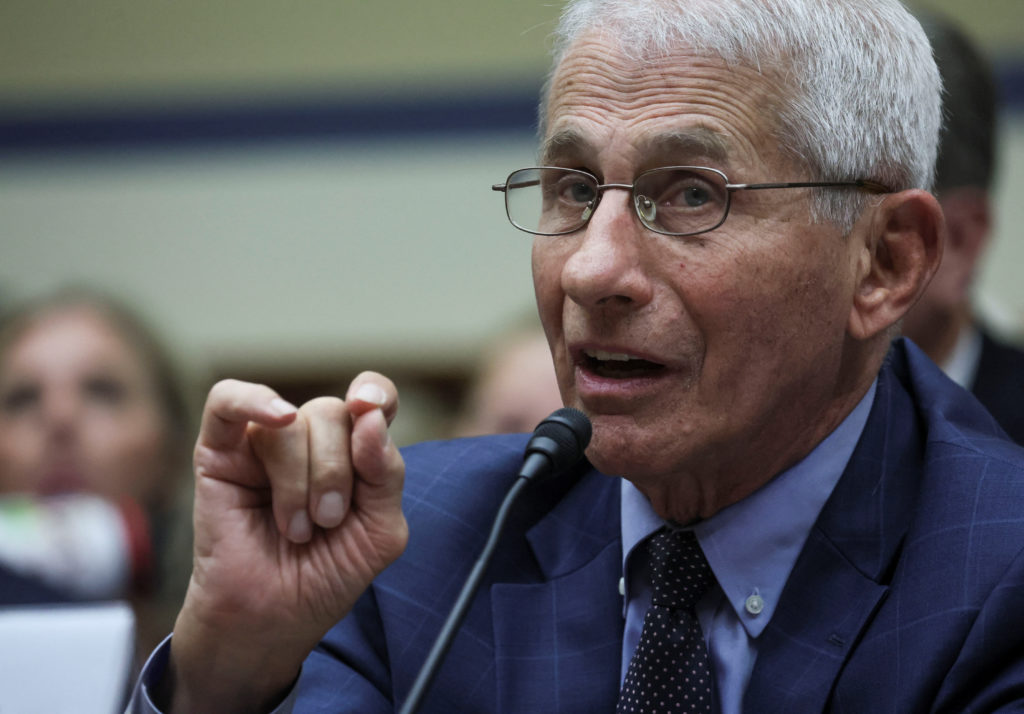
Fauci, who ran NIAID from 1984 until his retirement in 2022, appears in the emails telling colleagues to erase certain messages a move that could constitute a violation of federal records laws.
The exchanges also reveal behind-the-scenes discussions with top public health leaders about strategies to “get ahead of the science and the narrative,” particularly to bolster the idea that COVID-19 originated naturally in animals rather than through a laboratory leak.
Paul argues these communications are essential to understanding how taxpayer money may have been used to fund risky virological experiments and how public health messaging was shaped during the pandemic’s onset.
Fauci has until September 23 to hand over communications spanning 2018 to 2023, including emails, texts, and records tied to COVID-19, gain-of-function research, and U.S. or Chinese labs conducting such studies.
A History of Clashes
This is far from the first time Paul has taken aim at Fauci. He previously referred criminal complaints to the Department of Justice in 2021 and 2023, accusing the doctor of perjury, a felony that carries up to five years in prison.
Journalist and former Senate investigator Paul D. Thacker didn’t mince words:
“Paul caught Fauci lying under oath before, but there’s zero wriggle room for Fauci this time. Only the most deranged Fauci fan can defend this.”
Attorney Greg Glaser warned that if Fauci refuses to comply, Paul could escalate. “[Paul] would first pursue enforcement through the full chamber by a motion to hold Fauci in contempt. Upon Senate vote and passage, the matter would be referred to the DOJ for criminal prosecution and a court order to authorize U.S. Marshals to seize Fauci’s devices and documents for forensic examination.”
Emails From the Pandemic’s Early Hours
One of the most explosive revelations comes from a February 2, 2020, exchange with then-NIH Director Francis Collins.
Fauci responded to Collins about promoting the zoonotic theory of the virus’s origin with a short but damning instruction:
“Please delete this e-mail after you read it.”
That message came just one day after the infamous “Proximal Origins” call, where top scientists debated the likelihood of a lab leak but ultimately pushed a paper supporting a natural origin — a study later used by government officials and media to discredit skeptics of the official line.
Another email, dated July 20, 2020, shows Fauci reacting to a Paul social media post comparing COVID death rates across states. Fauci’s blunt reply: Paul is “full of s..t.” He told his staffer to “please delete this e-mail after you read it.”
Paul blasted the revelation as “another layer of the Fauci COVID Coverup” and insisted Fauci “knew the reckoning was eventually coming.”
Gain-of-Function in the Crosshairs
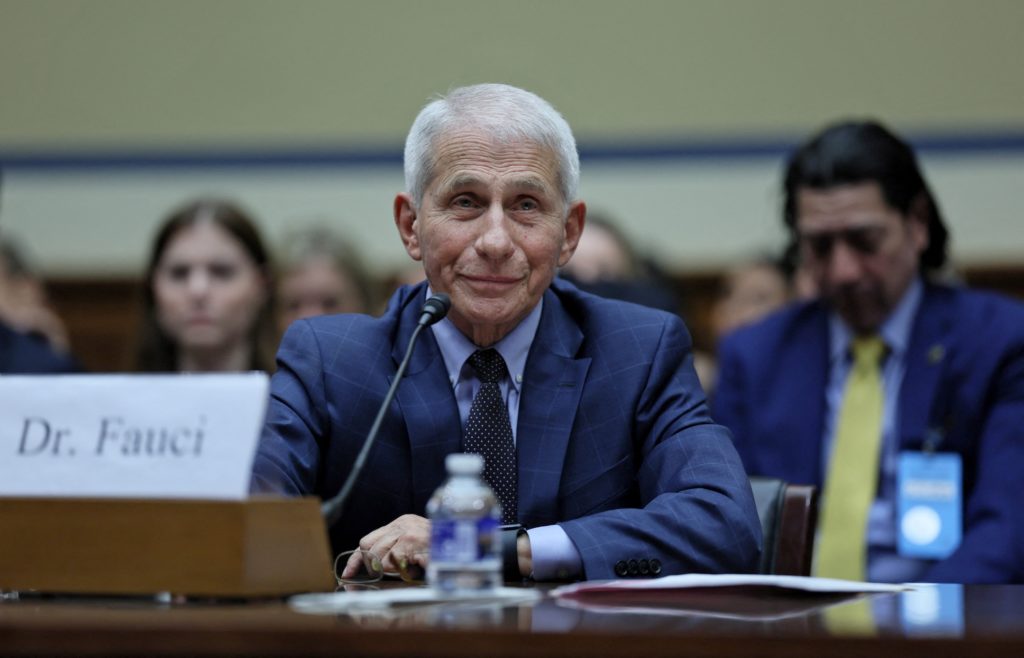
The debate circles back to gain-of-function research, controversial experiments designed to make viruses more transmissible or deadly. Fauci has repeatedly denied U.S. funding of such work at the Wuhan Institute of Virology, but critics aren’t convinced.
Rutgers biologist Richard Ebright said the disclosures suggest something larger: “The evidence shows that they misfeasantly violated federal policies on gain-of-function and enhanced potential pandemic pathogen research and that, to cover up their misfeasance and its role in causing COVID-19, they committed criminal conspiracy to defraud, fraud, destruction of federal records, obstruction, misuse of federal funds and perjury.”
Meanwhile, Paul has rolled out legislation to tighten oversight of dangerous experiments, including the Risky Research Review Act and the NIH Reform Act, aimed at curbing taxpayer funding of controversial virology work.
The Road Ahead
Congress is set to press forward with its COVID origins investigation. Fauci, once the most visible face of America’s pandemic response, now faces fresh scrutiny over whether he misled lawmakers, manipulated narratives, or attempted to cover his tracks.
The deadline for compliance is fast approaching. And with Paul vowing to hold him accountable, the question looms: Will Fauci turn over the records, or will this fight end up in the courts?