

Melanie Perkins has always dreamed on a grand scale. “If I don’t feel small and inadequate before it, it’s not big enough,” she says. “If it doesn’t simultaneously move me, scare me, excite me, and humble me, the goal probably isn’t big enough.” The line is not bravado, it is a compass. It has steered her from a cluttered living room in Perth to the helm of a platform used by hundreds of millions.
If I don’t feel small and inadequate before it, it’s not big enough,” she says.
The Problem Only a Teacher Could See
Back in 2007, a nineteen-year-old Perkins was tutoring classmates on Adobe software and watching them drown in menus. The tools were powerful, yet impenetrable. Class time vanished in a scavenger hunt for buttons. She could see it plainly: people needed something simpler. At the University of Western Australia, where she studied psychology and communications, the idea hardened into a mission. Why not design tools for everyone, not just designers? “The question was, could it be us that could create that?” Perkins later told Fortune.
Her first experiments were scrappy. “My mum’s living room became my office, and my boyfriend became my business partner, and we started enabling schools to create their yearbooks really, really simply,” Perkins explained. The venture, Fusion Books, was small in scope, laser focused on school yearbooks. Yet it offered a crucial proof. If teachers could make beautiful books without wrestling with desktop publishing, perhaps anyone could make anything.
A Worldview Forged on the Road
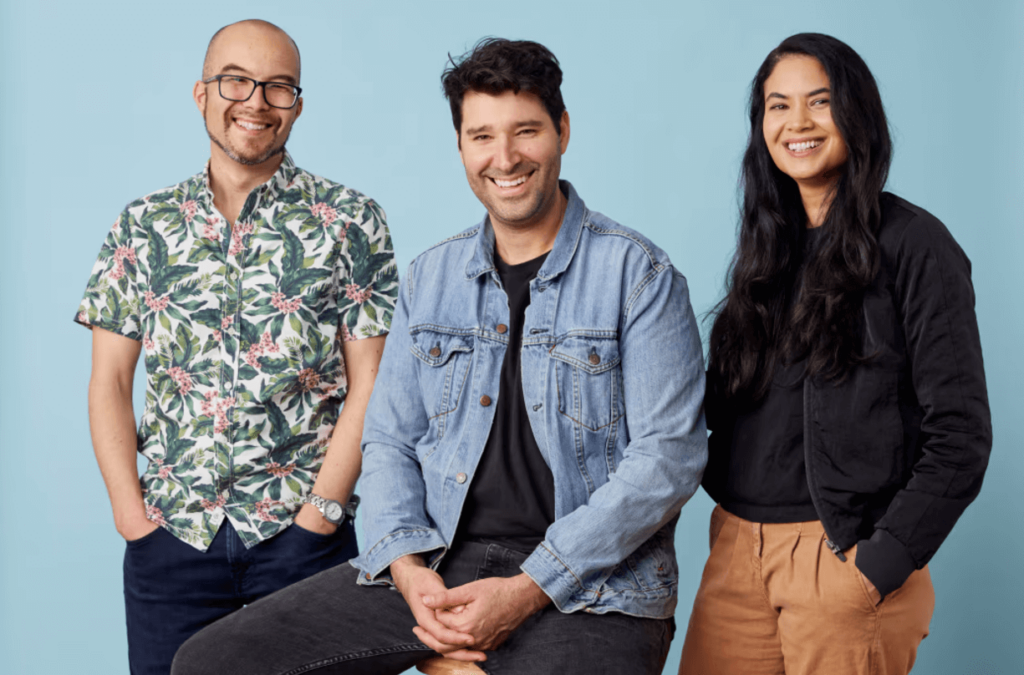
In their early twenties, Perkins and her partner, Cliff Obrecht, took off with backpacks and a shoestring plan. “We went to places we had never even heard of, staying in the cheapest accommodation we could find,” Perkins recalls. Growing up in Perth, “I thought that was the whole world,” she says. “Then you get to the outskirts of India and realize it is just a tiny speck on the map.”
Those months taught them how to solve problems together in unfamiliar places, and it taught them something more personal. “We learned that we quite liked spending time together, and we learned that we could take on challenges,” she reflects. Cliff never hid his view of Melanie’s strengths. “She is the more capable one,” he often said. His support was not abstract. After a hard-won early investor meeting, he sent her a note that read, “You are the best businesswoman in the world, and I am so proud of you. Well done. You WILL SUCCEED. I HAVE NO DOUBT.”
One Hundred Nos, One Letter, and a Bigger Yes
In 2012, Perkins flew to San Francisco to raise money. She collected rejections at a staggering pace. Investors questioned the market, the distance, the relationship between co-founders. As the visa clock ran out, she wrote herself a note to stay centered. “Mel, you’re extremely tired. You are in a challenging situation, though you can pull through. Nothing bad is really happening. You’re just feeling depressed because you are used to achieving things quickly. It’s a hard environment. There is no doubt you will succeed and you will find the team you need, get the investment you need and build the company you have always wanted. You have chosen to put yourself in a challenging situation. If it wasn’t challenging you wouldn’t feel as satisfied when you get to the end goal.”
Years later, she would read that letter on stage, proof that grit is a muscle. And that muscle soon got another workout.
The Kitesurfing Bet That Changed Everything
Opportunity arrived from an unexpected direction. Investor Bill Tai invited Perkins and Obrecht to MaiTai, a kitesurfing retreat where founders and financiers compare notes between runs. There was only one hitch. “I had not done [kitesurfing] before — and, to be honest, it’s not something that I would normally, naturally try,” Perkins said. “I decided to give it a go because when you don’t have any connections, you just kind of have to wedge your foot in the door and wiggle it all the way through.”
“I decided to give it a go because when you don’t have any connections, you just kind of have to wedge your foot in the door and wiggle it all the way through.”
On the beach, the pitches felt different. They were human, direct, and persistent. Connections led to commitments. Among them was a path to a technical co-founder, though it took persistence there too. When Perkins first approached Cameron Adams, the ex-Google designer-engineer hesitated. “He said no, actually,” she recalls with a laugh. She did not let up. Soon the trio clicked. “It was extraordinarily exciting to get to work with him,” she remembers.
Launch Day Almost Derailed

With a seed round locked and a small team assembled, the new company sprinted toward launch. Early tests revealed a subtle barrier. People were afraid to touch anything. “We realized it wasn’t just the software that needed to be simple; we had to build people’s confidence. Every confusing button made users feel stupid. We had to get that foundation right,” Perkins said.
Then came the scare. Days before launch, Cameron Adams was hit by a taxi. He returned to his keyboard bandaged and determined. The team shipped on schedule. New users still brought their doubts, whispering “I’m not creative” or “I don’t know how to design this.” The solution was playful and immediate. Onboarding nudged people to drag a hat onto a cartoon monkey, then change its color to red. Confidence followed action, and word of mouth followed confidence.
From One Million to Hundreds of Millions
Momentum built quickly. Templates, photos, and illustrations did the heavy lifting that once demanded training. The content strategy looked audacious from the outside and obvious from the inside. “We started with a million templates and photos and illustrations,” Perkins shared. “With Canva, we now have 100 million.”
Listening was the other engine. “Right from those very early days, we’d speak to our customers, learn what they wanted, then iterate on it,” Perkins said. The freemium model felt generous rather than stingy, which turned users into evangelists. “If people feel really confident in the free product, they’re happy to share it,” Melanie noted. “And if they feel the paid product is great value, they’re happy to share that too.”
Culture Built for Speed and Sanity
Inside the company, the north star was big, simple, and galvanizing. “Set Crazy Big Goals and Make Them Happen” was not a poster, it was a practice. “It’s constantly just dreaming the next big dream and then figuring out how the hell you’re going to get there,” Perkins said.
Hierarchy took a back seat to momentum. Teams were encouraged to hand off responsibilities as the company scaled, a habit Cameron Adams shorthands as “give away your Legos.” For the founders, role clarity kept the partnership strong. For everyone, mental health was treated as a skill. At SXSW, Perkins shared her own toolkit for the inevitable highs and lows. “I think it’s really important for everyone, regardless of what challenge they’re trying to tackle, the have a few tools at their fingertips that they can reach to when they’re feeling the huge variety of emotions that they feel when they’re trying to tackling a big goal,” she said.
AI, Not as Hype, but as Help
Canva’s embrace of artificial intelligence was practical, not performative. One early hit became emblematic. “With one click, you could do something that would often take people hours,” Perkins noted, describing Background Remover. From there, the company expanded into a suite of tools that suggested layouts, cleaned photos, and generated images and copy right where users already worked. “It’s really about embedding AI across our entire product suite,” she said. The technical shift felt natural to a platform born on the web. “Being a digital native product, it’s been relatively easy for us,” she added.
The Work Ahead
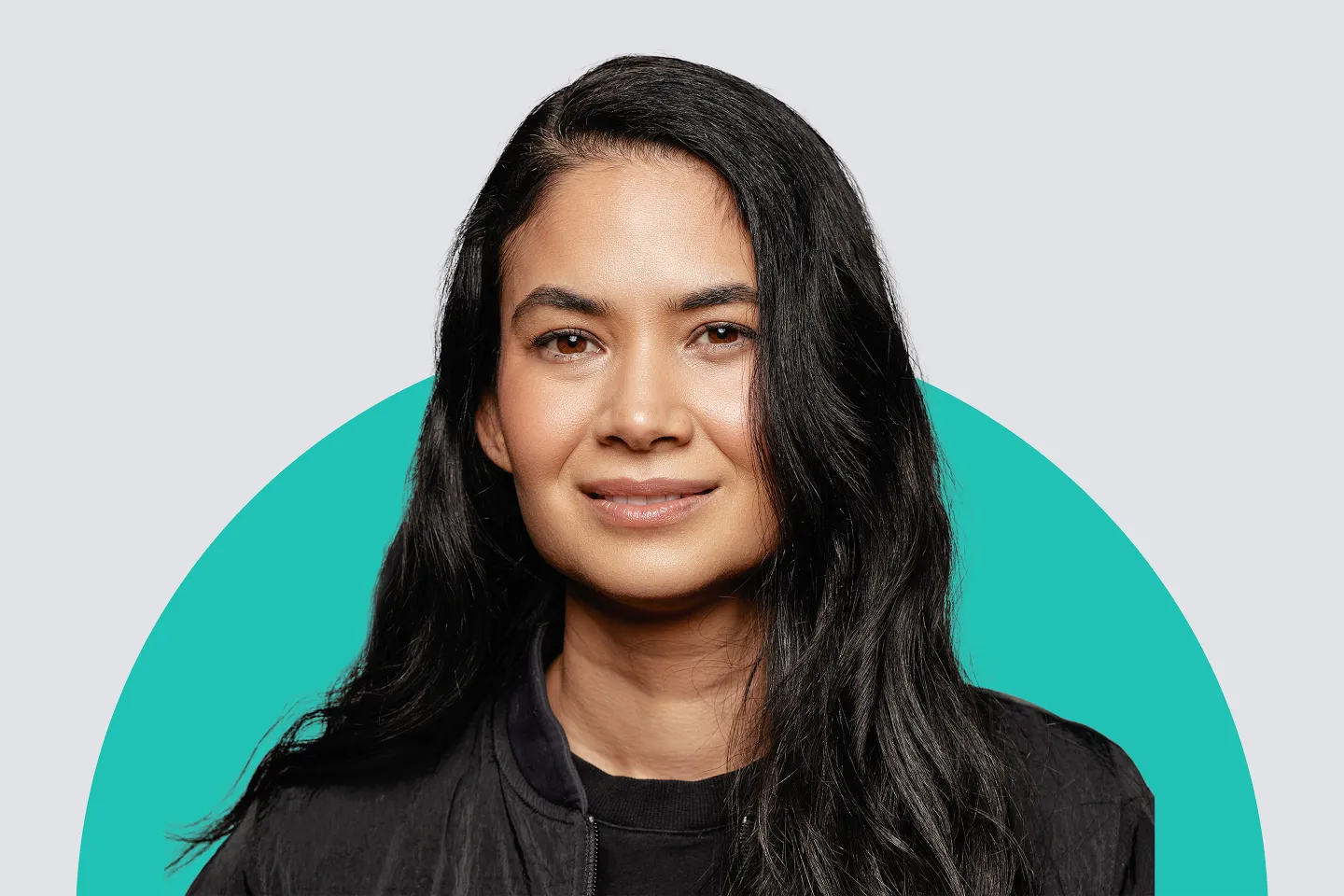
Perkins talks about impact in the same breath as scale. She and Obrecht have pledged to give away most of their wealth. “There’s enough money, goodwill, and good intentions in the world to solve most problems,” Melanie says. “We want to spend our lifetime working towards that.”
Her next headline metric is as audacious as the first. One billion users is the target. “When we set that as a goal a number of years ago, it seemed completely ridiculous,” Perkins admits. “But over time, it’s becoming less ridiculous.”
The Line She Lives By
It is worth returning to the sentence that started it all. “If I don’t feel small and inadequate before it, it’s not big enough. If it doesn’t simultaneously move me, scare me, excite me, and humble me, the goal probably isn’t big enough.” For Melanie Perkins, that is not poetry. It is the plan.