

Publicly, the tone could not sound friendlier.
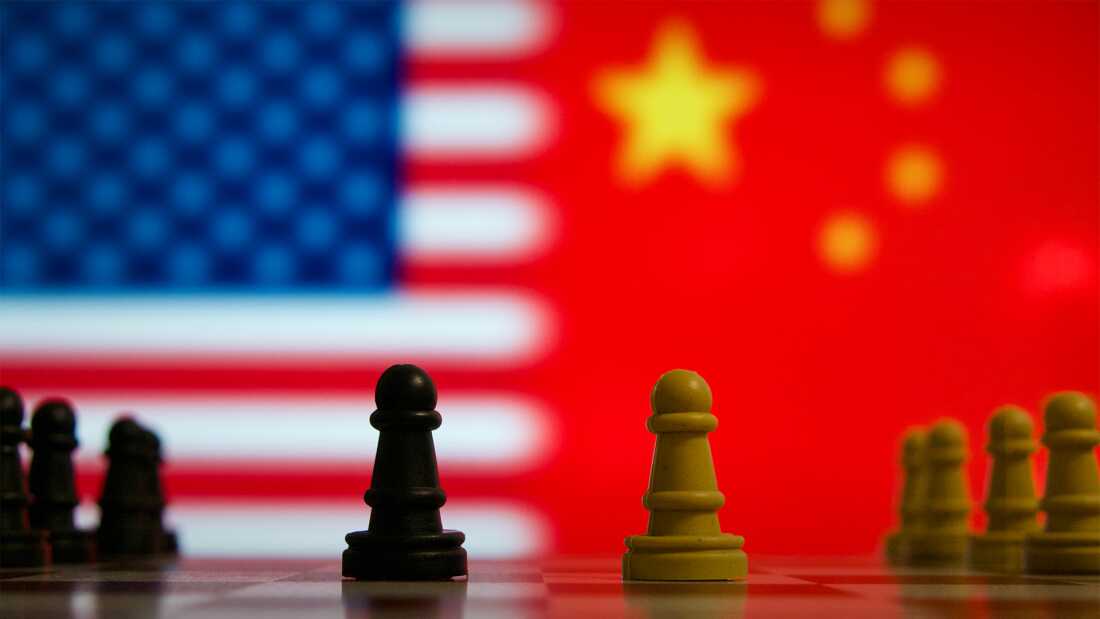
President Trump recently spoke by phone with Chinese President Xi Jinping and emerged upbeat. Posting afterward on Truth Social, Trump declared, “Our relationship with China is extremely strong!”
Those warm words followed a productive in-person meeting in Korea and the scheduling of additional talks in the months ahead. On the surface, the world’s two largest economies appeared to be leaning into cooperation.
Still, beneath the handshakes and pleasantries, a far more serious conflict is accelerating. It is a battle over artificial intelligence, the defining technology of the 21st century.
The AI Arms Race No One Can Ignore
Behind closed doors, Washington and Beijing are locked in a high-stakes struggle for technological dominance. Unlike trade disputes or tariff skirmishes, this rivalry cuts straight to national security, military power, and economic survival.
China, by mounting evidence, is not playing by the rules meant to govern the global economy.
That reality came into sharp focus with a Justice Department announcement in late November.
Smuggling Chips, Skirting the Law
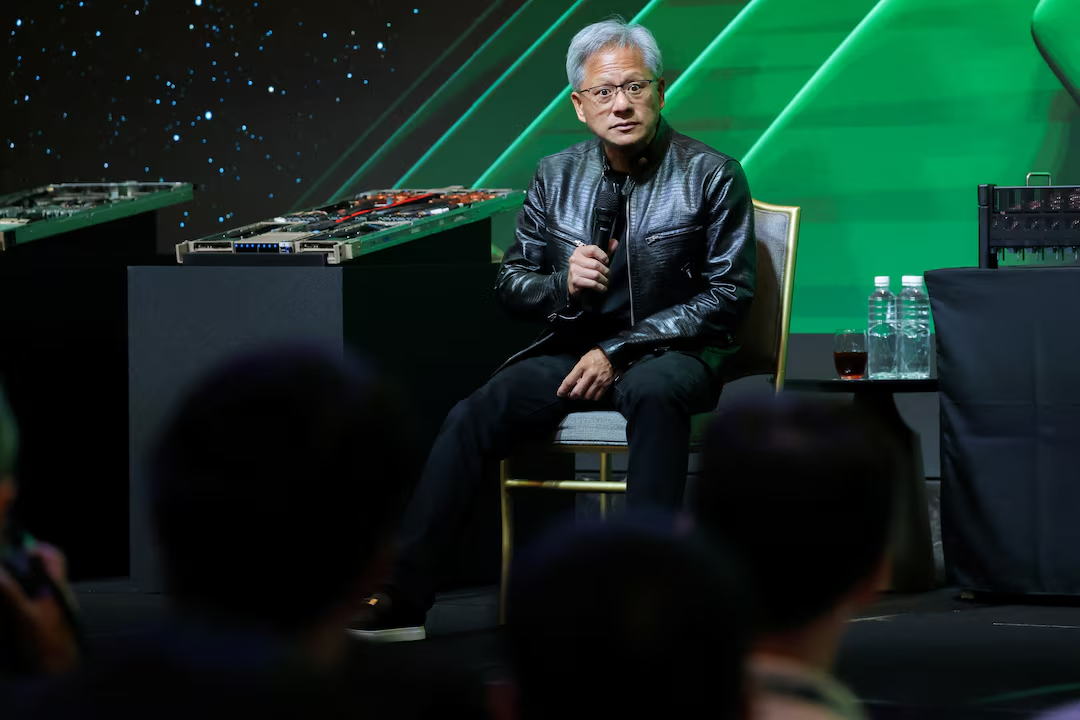
On November 20, federal prosecutors charged two Americans and two Chinese nationals with conspiring to illegally export roughly 400 high-performance graphics processing units to China.
These advanced chips are tightly regulated for a reason. Federal law requires export licenses because the technology can be used to develop and strengthen artificial intelligence systems.
The accused conspirators did not have licenses. They never even applied for them.
Instead, prosecutors say they lied about the destination of the shipments. In return, the group allegedly received $3.89 million in wire transfers from China.
The case underscores how far Beijing and its networks are willing to go to acquire restricted technology.
Beijing’s 2030 AI Ambition
This smuggling effort did not happen in a vacuum.
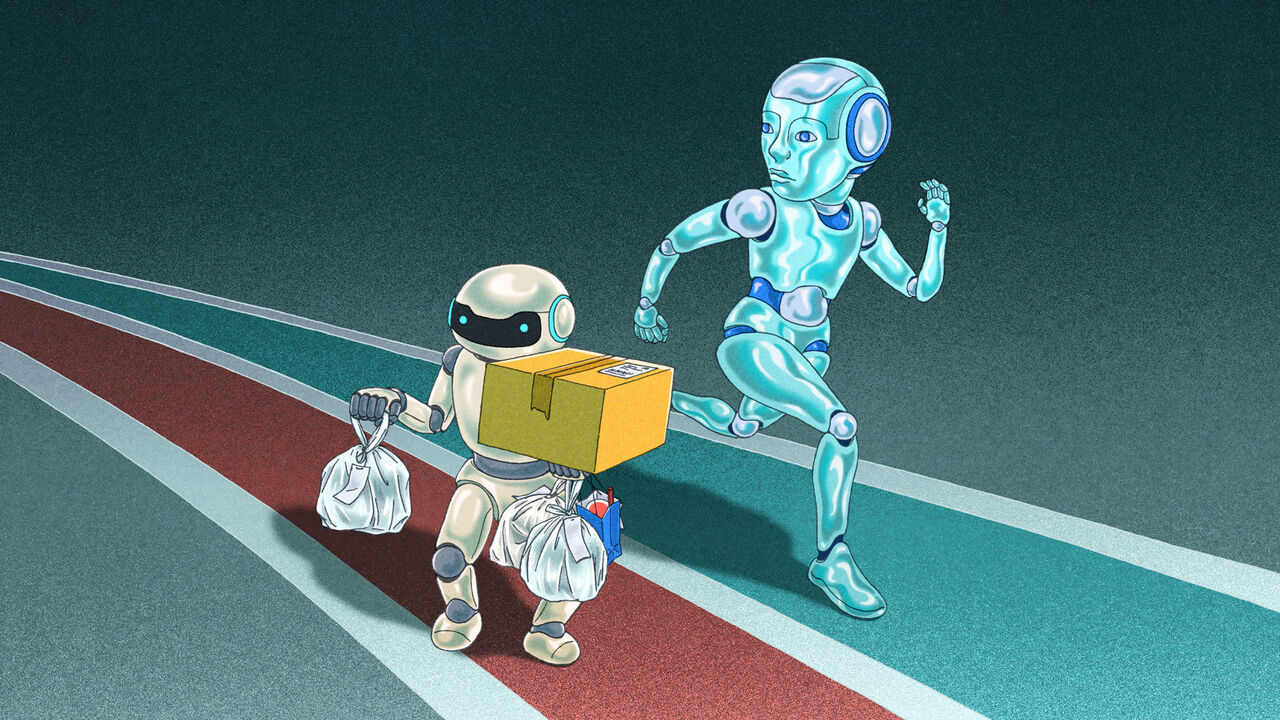
China has openly declared its ambition to become the world’s leading artificial intelligence power by 2030. According to the Information Technology and Innovation Foundation, “China is the global leader in AI research publications and is neck and neck with the United States on generative AI.”
The group adds that China is “advancing rapidly in AI research and application, challenging the United States’ dominance in this critical field.”
Those gains are no accident. They are fueled by massive state-backed investment.
Between 2000 and 2023, venture capital funds linked to the Chinese government poured $184 billion into China-based AI companies, according to a study conducted by professors at Harvard, MIT, and Oxford.
Huawei’s Quiet Bombshell
Then came an eyebrow-raising coincidence.
One day after the Justice Department unveiled the smuggling indictment, Huawei announced a new tool called Flex:ai. The company claimed it “improves the utilization of artificial intelligence-based chipsets.”
The press release dutifully nodded to corporate virtue, stating the technology would “speed up the democratization of AI.”
Yet the most consequential detail appeared only at the very end, attributed vaguely to unnamed sources. According to that final line, “The new software tool will help China create an analogue AI chip 1,000 times faster than Nvidia’s chips.”
A Pattern of Deception
Huawei’s history gives reason for skepticism.
The company is the world’s largest manufacturer of telecommunications equipment. It is also no stranger to U.S. indictments.
In 2020, the Justice Department charged Huawei and four subsidiaries, largely over efforts to steal trade secrets from American companies. Prosecutors alleged the company deployed a wide range of tactics to obtain confidential information.
Among the most brazen, employees were allegedly paid bonuses for successfully stealing proprietary data from competitors. When U.S. law enforcement began investigating, Huawei reportedly instructed its employees not to cooperate.
Suffice to say, trust is in short supply.
Washington Pushes Back
The Trump administration has taken notice.
In late June, it approved a merger between Hewlett Packard Enterprises and Juniper Networks, two U.S. firms that compete directly with Huawei. According to Axios, a senior U.S. national security official explained the decision plainly: “In light of significant national security concerns, a settlement … serves the interests of the United States by strengthening domestic capabilities and is critical to countering Huawei and China.”
The official added that blocking the deal would have “hindered American companies and empowered” Chinese competitors.
Collision Course Ahead
The global importance of artificial intelligence makes this rivalry deeply unfortunate. Yet it also makes it unavoidable.
China is not abiding by the rules that govern international commerce. According to the Justice Department, Beijing is using AI to strengthen its military, test weapons of mass destruction, and expand surveillance capabilities.
Diplomatic visits will continue. President Trump is expected to travel to Beijing next year, while Xi Jinping is scheduled to visit Washington.
The leaders will emphasize cooperation. They always do.
Still, no algorithm is needed to see where this is heading. The United States and China are barreling toward a collision over artificial intelligence.
Buckle up.