

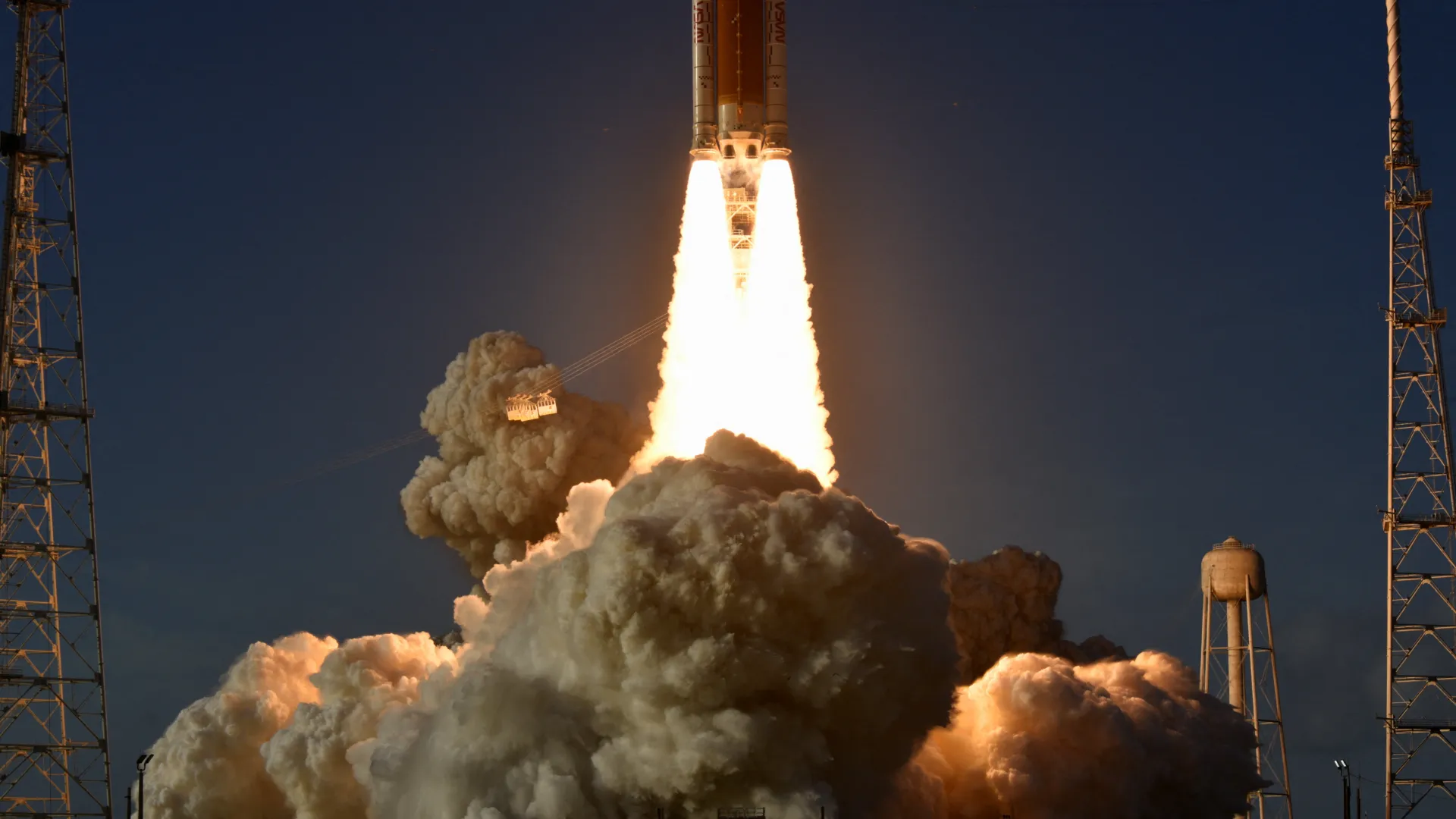
The Artemis II mission roared into history Wednesday evening, sending four astronauts beyond low-Earth orbit for the first time in more than half a century. As engines thundered to life, the powerful rocket lifted off from Florida, marking a defining moment in humanity’s renewed push toward deep space exploration.
Hours earlier, the crew had made a final appearance, calm yet focused. By 6:35 p.m., they were strapped in and ready. Then came liftoff, a spectacle of fire and force, carrying them farther from Earth than any crewed mission since 1972.
Crew Begins Journey Beyond Earth Orbit
Aboard the Orion spacecraft, astronauts Reid Wiseman, Victor Glover, Christina Koch, and Canadian Space Agency astronaut Jeremy Hansen embarked on a mission designed to orbit the moon and return safely to Earth.
This is no ordinary trip. While the mission will not land on the lunar surface, it pushes human spaceflight into deep space once again. That alone makes it historic.
Meanwhile, the journey will take the crew around the far side of the moon, a region unseen from Earth. Over several days, they will test systems critical for future missions, all while traveling vast distances never attempted in decades.
Most Powerful Rocket Ever Built
Towering at 322 feet, NASA’s Space Launch System stands as the most powerful rocket the agency has ever developed. It is built for one purpose, to carry humans deeper into space than ever before.
The rocket and Orion spacecraft combination represents years of engineering, testing, and persistence. This mission serves as a proving ground, ensuring everything works before future lunar landings begin.
However, the road to launch was not without challenges. Engineers previously discovered fuel and helium leaks during testing, forcing a delay from the original February timeline. Those issues were resolved, clearing the path for Wednesday’s successful launch.
A Critical Step Toward Future Moon Landings
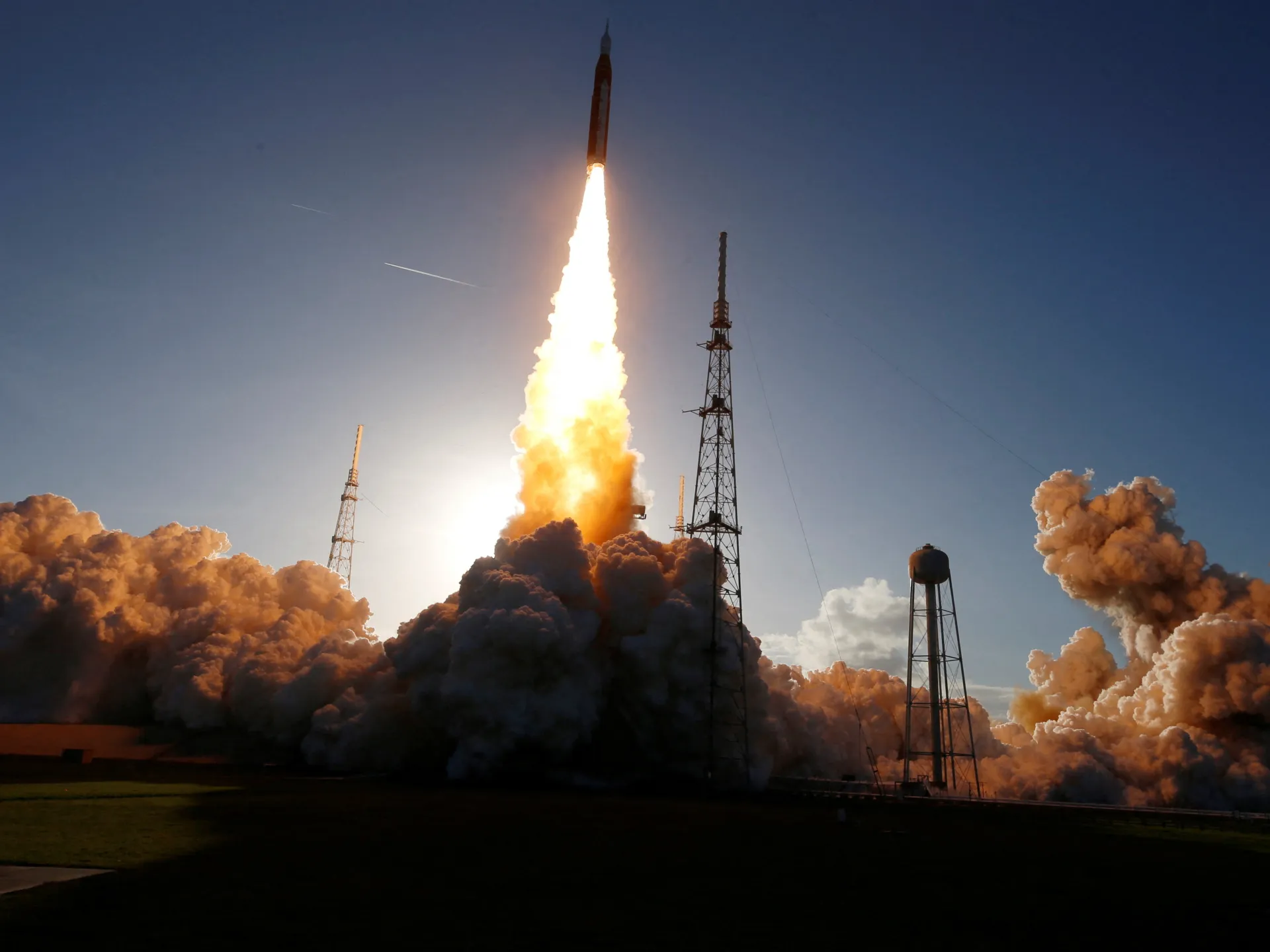
Artemis II follows the earlier uncrewed Artemis I test flight, moving NASA closer to its long-term lunar ambitions. Each mission builds on the last, gradually increasing complexity and capability.
Initially, Artemis III was expected to handle the first return to the lunar surface. Now, plans suggest that milestone may shift to Artemis IV. Either way, the program continues to evolve.
In contrast to earlier missions, future flights may involve partnerships with private companies, including SpaceX and Blue Origin, particularly for lunar landing systems. That collaboration could shape the next era of exploration.
Political Leaders Applaud Historic Mission
As the countdown reached its final moments, support poured in from national leaders. Their reactions reflected both pride and the broader significance of the mission.
“America is going back to the Moon!” President Donald Trump declared. “America doesn’t just compete, we DOMINATE, and the whole World is watching. God bless our incredible Astronauts, God bless NASA, and God bless the Greatest Nation ever to exist, the United States of America!”
Meanwhile, House Speaker Mike Johnson echoed similar sentiments, focusing on the human achievement behind the mission.
“Praying for the safety and success of the Artemis II crew and @NASA as they undertake a mission that will carry humanity farther into space than we have gone in over half a century,” he said.
“I had the privilege of hosting these courageous pioneers at the State of the Union earlier this year. Americans are watching proudly as our Golden Age reaches new heights!” Mike Johnson said.
Laying The Groundwork For Mars
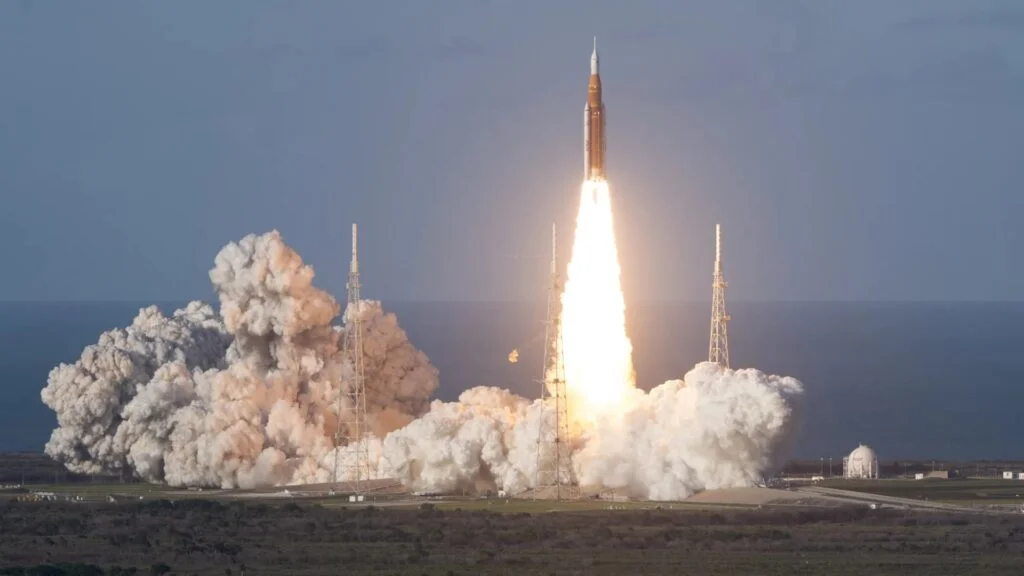
Beyond the immediate mission, Artemis II represents something even bigger. It is a stepping stone toward sustained lunar exploration and, ultimately, human missions to Mars.
NASA has long stated that the Artemis program is not just about returning to the moon. It is about building a long-term presence, testing technologies, and preparing for deeper space journeys.
Still, the significance of this launch cannot be overstated. After more than 50 years, humans are once again venturing beyond Earth’s immediate neighborhood. The question now is not if humanity will go farther, but how soon.