

Tensions in the Middle East surged again after President Donald Trump announced a major U.S. military operation targeting Iran’s most critical oil export hub. The strike, he said, delivered a powerful message. But it also raised serious questions about what comes next for global energy markets and regional stability.
Strike Targets Strategic Kharg Island
President Donald Trump revealed that U.S. forces carried out a large-scale bombing raid on Kharg Island, a crucial Iranian oil terminal in the Persian Gulf. The island plays a central role in Iran’s economy, handling the vast majority of its crude exports.
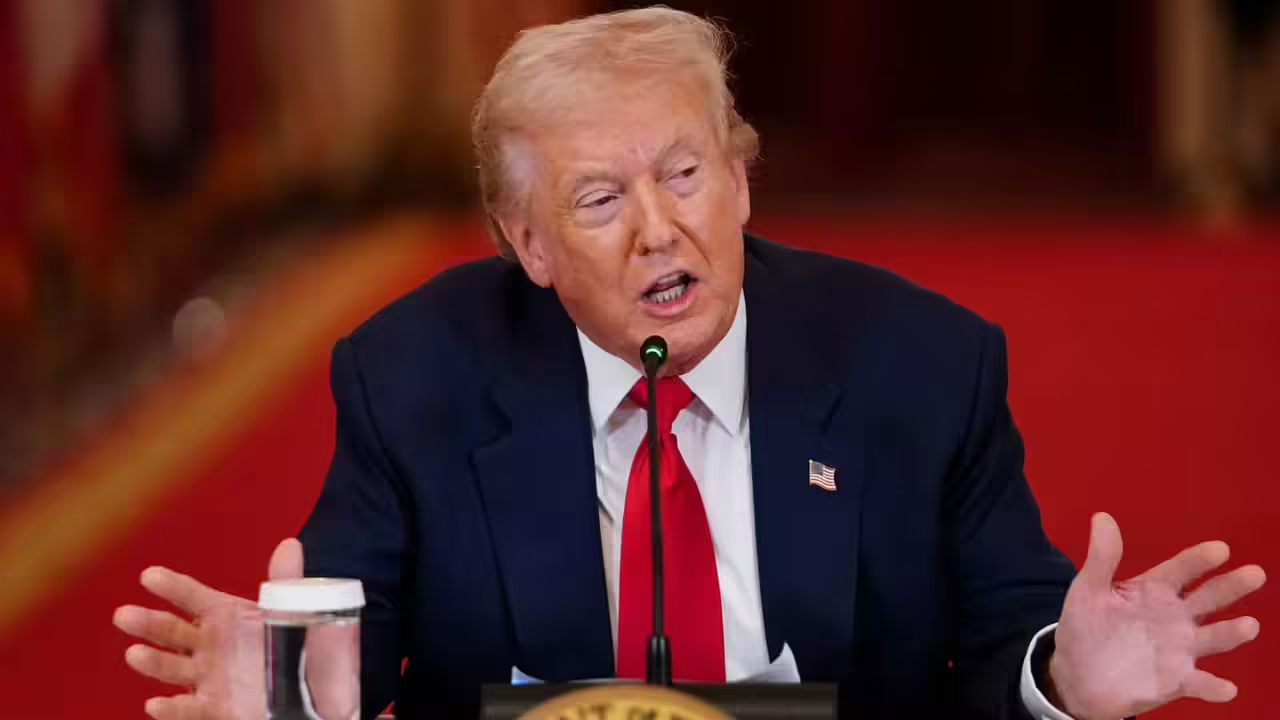
“Moments ago, at my direction, the United States Central Command executed one of the most powerful bombing raids in the history of the Middle East, and totally obliterated every MILITARY target in Iran’s crown jewel, Kharg Island,” Trump wrote on Truth Social.
Located roughly 35 miles off Iran’s southwestern coast near Bushehr province, Kharg Island may be small in size, comparable to New York City’s Central Park, but its economic importance is enormous. It processes about 7 million barrels of oil per day, with nearly 90% of Iran’s crude exports flowing through it.
Oil Infrastructure Spared, For Now
Despite the scale of the operation, Trump emphasized that U.S. forces deliberately avoided striking oil facilities on the island. That decision, however, may not hold if tensions escalate further.
“Our Weapons are the most powerful and sophisticated that the World has ever known but, for reasons of decency, I have chosen NOT to wipe out the Oil Infrastructure on the Island. However, should Iran, or anyone else, do anything to interfere with the Free and Safe Passage of Ships through the Strait of Hormuz, I will immediately reconsider this decision,” Trump added.
That warning puts the spotlight squarely on the Strait of Hormuz, a narrow but vital waterway that connects the Persian Gulf to global markets.
Global Energy Markets Feel Immediate Impact
Meanwhile, the strike has already sent shockwaves through global energy markets. The Strait of Hormuz carries roughly 20 million barrels of oil daily, along with about one-fifth of the world’s liquefied natural gas supply.
Any threat to this route has immediate consequences. This week, oil prices surged past $100 per barrel for the first time since 2022, signaling how quickly geopolitical tensions can ripple through the global economy.
At the same time, consumers are starting to feel the impact. Gasoline prices climbed to an average of $3.63 per gallon nationwide, while diesel jumped sharply to $4.89 per gallon. Diesel, in particular, reacts quickly due to its close link to freight and industrial demand.
Rising Risks Around Strait Of Hormuz
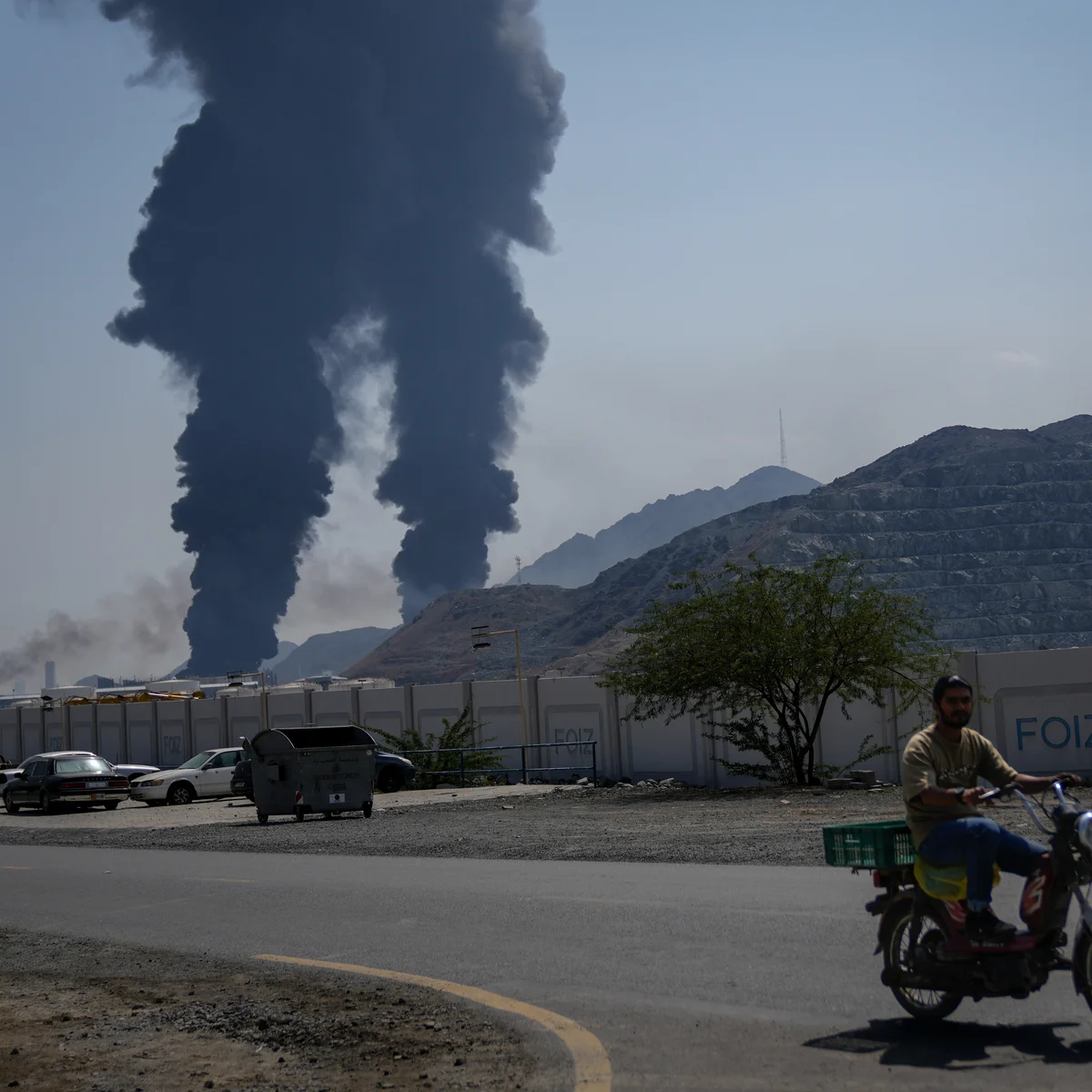
The situation remains highly volatile. The Strait of Hormuz is not just another shipping lane, it is one of the most critical choke points in global energy supply.
As tensions rise, even the possibility of disruption can trigger market instability. In response, U.S. officials are exploring measures to secure shipping routes and protect oil tankers moving through the region.
Before departing for Florida, Trump indicated that military action could extend to protecting commercial vessels.
“I will not allow a terrorist regime to hold the world hostage and attempt to stop the globe’s oil supply. And if Iran does anything to do that, they’ll get hit at a much, much harder level,” Trump said during a news conference in Florida.
Military Presence May Expand
That said, the U.S. Navy could soon take a more active role. Trump suggested that naval escorts for tankers may begin “very soon,” a move that would significantly increase the U.S. military footprint in the region.
“In the long run, oil supplies will be dramatically more secure without the threat of Iranian ships, drones, missiles,” Trump added.
Still, analysts warn that any escalation in the Strait of Hormuz could have far-reaching consequences. Not only would it disrupt oil flows, but it could also destabilize shipping lanes and push energy prices even higher.
A Fragile Balance Ahead
For now, the situation hangs in a delicate balance. The U.S. has demonstrated its military reach, while Iran faces mounting pressure over one of its most critical assets.
However, the bigger question remains unresolved. Will this show of force deter further conflict, or ignite a broader crisis in one of the world’s most sensitive regions?
The answer may shape global energy markets and geopolitical stability for months to come.