

New York City Mayor Zohran Mamdani has turned the idea of “fast and free buses” into one of the defining ambitions of his administration. He frames it as a basic affordability measure and a long-overdue correction for a transit system that many advocates say has been ignored for decades. Yet the enthusiasm surrounding the proposal is steadily running into the most stubborn obstacles in the city: money, politics, and an agency already stretched thin.
Supporters say fare-free buses would calm conflicts, reduce safety concerns, and bring immediate relief to riders who depend on buses for everyday needs. Critics warn it could blow a hole in the Metropolitan Transportation Authority’s budget unless the city finds a stable revenue source and a concrete operational plan. And all of this is unfolding as New Yorkers continue relying on a bus system already considered one of the slowest in the country.
A System Struggling to Keep Up
Even as millions of people use the city’s buses daily, the system’s speed and reliability remain at the bottom of national rankings. That sense of imbalance fuels the political energy behind Mamdani’s proposal. Many riders feel buses have been deprioritized for years, despite serving students, seniors, caregivers, and workers who depend on them just as heavily as subway commuters.
“We’re the biggest ridership, and yet we’re subject to the slowest buses. It’s a fundamental unfairness. It’s an embarrassment,” said Danny Pearlstein, policy and communications director at the Riders Alliance.
Danny Pearlstein added, “That is why this administration’s call for fast and free buses resonates.”
Pearlstein, like others who have weighed in, views the debate as part of a broader shift in how major cities consider affordability, safety, and the role of public goods.
Safety First, Say Advocates
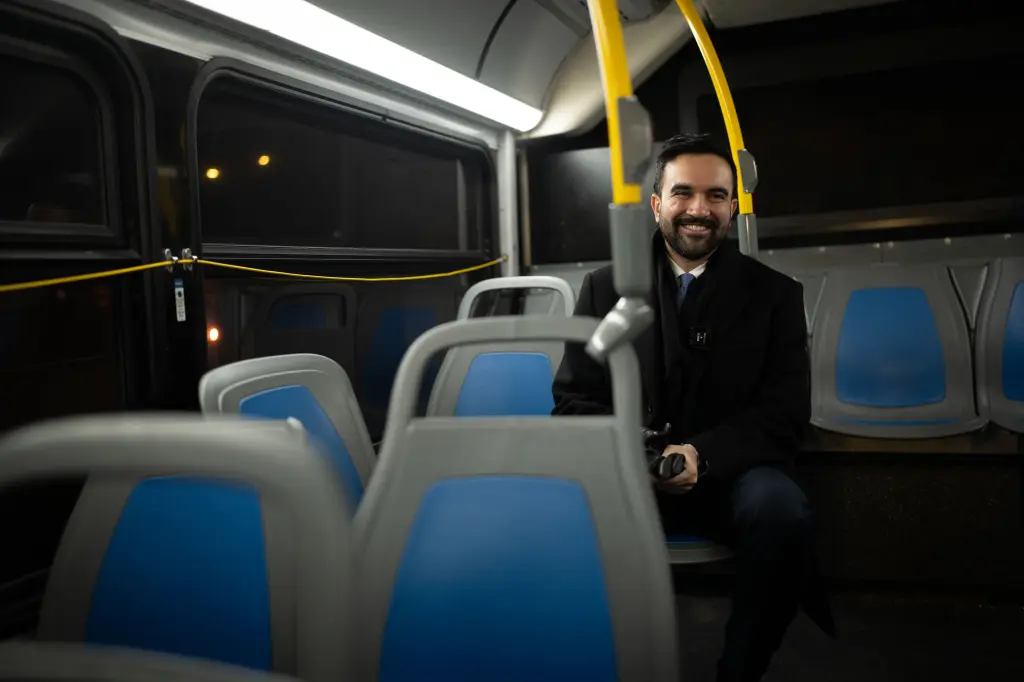
Supporters of fare-free service frequently start with safety. They argue that eliminating payments can reduce friction between passengers and operators, preventing disputes that escalate into aggression.
“When you eliminate fare payments on the buses, the friction between passengers and the drivers goes away,” said Brian Fritsch, associate director of the Permanent Citizens Advisory Committee to the MTA. “It does create a safer atmosphere for drivers. That has been a sore spot for a number of years.”
Transit analyst Charles Komanoff has long modeled the effects of fare-free policies. He agrees safety is a real factor.
“Every year, there’s maybe a dozen cases in which a bus driver is assaulted,” Komanoff said. “Presumably that would shrink or maybe disappear entirely if there was no expectation to pay the fare in the first place.”
What the Pilot Program Revealed
New York’s recent fare-free bus pilot, which suspended fares on one route in each borough for nearly a year, offered useful insight. Ridership jumped on all five routes, increasing by roughly 30 percent on weekdays and closer to 40 percent on weekends. However, most of that growth came from existing riders taking additional trips, not from brand-new riders entering the system.
The pilot carried an estimated cost of about $12 million in lost fare revenue and operating expenses. Its core message was straightforward: eliminating fares boosts ridership and reduces conflict, but the financial trade-offs are immediate and measurable.
Pearlstein believes the pilot still showed what fare-free buses can offer. He says buses became more appealing and safer, even if they didn’t deliver a dramatic surge of new users.
Affordability and Equity at the Center
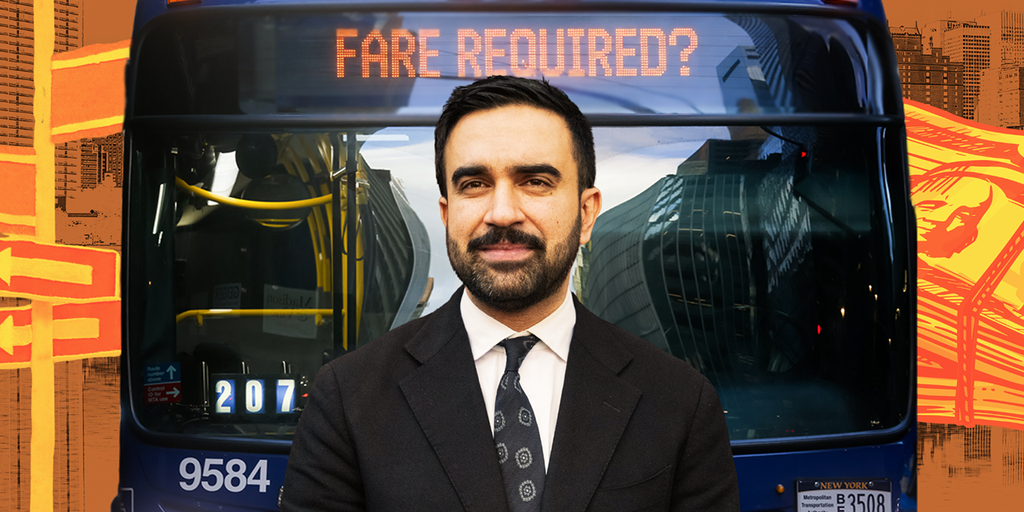
Beyond safety, supporters argue that fare-free buses would provide genuine financial relief for low-income New Yorkers who rely on buses for short, essential trips. Many of these riders live in transit deserts or far from subway lines.
“Most of the cost of bus operations is already paid for by public subsidies, not by fares,” Pearlstein said. “We’re collecting several hundred million dollars at the fare box, compared to several billion already invested. What we’re replacing is an order of magnitude smaller than what we already raise from other sources.”
Komanoff adds that fare-free service doesn’t simply shift riders from cars to buses. Instead, it allows people to make trips they currently avoid.
“We want people to have the basic right to the city,” he said.
Advocates also point to potential speed improvements. Eliminating fares can reduce boarding times and allow all-door boarding, shaving minutes off every ride. In his modeling, Komanoff estimated speeds could improve by 7 to 12 percent.
“That would be a material improvement in the lives of the two million New Yorkers a day who ride the buses,” he said.
Still, even supporters acknowledge that faster and more reliable buses matter more than free ones.
“Let’s be clear,” Komanoff said. “Making the buses work better, having them be speedier, more reliable, more consistent, is probably more important than making them free. But I think we can do both.”
The Funding Fight at the Heart of the Debate
Even advocates admit the biggest challenge is financial. Fare revenue helps secure long-term MTA bonds, meaning eliminating it would require serious restructuring, not just plugging an annual budget hole.
“If there were to be a free bus program, there would need to be some additional revenue coming into the MTA,” Fritsch said. “They obviously couldn’t just make cuts to make up that loss.”
The Permanent Citizens Advisory Committee has identified over 20 possible revenue streams, but Fritsch said political coordination remains the sticking point.
“The mayor has initiatives, the MTA is a state agency,” he said. “They need to meet somewhere in the middle.”
Komanoff estimates the price tag at around $800 million a year and believes city taxpayers should carry it.
“That’s not chump change,” he said. “But it’s not a game changer for the city’s finances either.”
A Philosophical Battle Over Public Goods
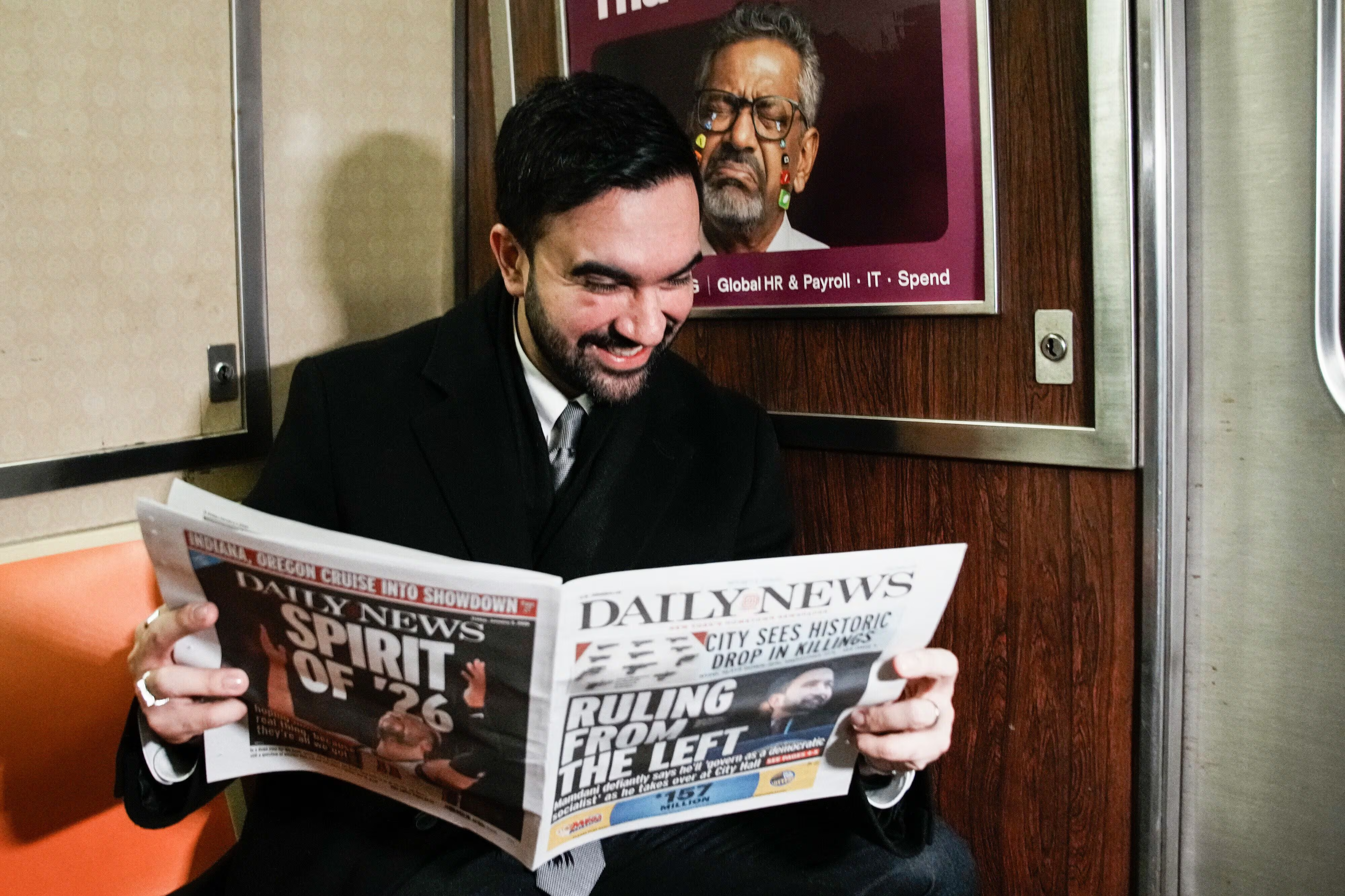
Mamdani, who identifies as a democratic socialist, frames fare-free buses as part of a broader push to make essential services accessible and publicly funded. His platform emphasizes taxing corporations and high earners to support major public programs and reduce everyday costs for working people.
Critics see a different picture. They argue that shifting the full cost of transit onto taxpayers represents a deeper ideological move toward universal public goods funded through redistribution rather than user payments.
Some warn the model could strain the system’s reliability.
“We don’t have enough bus drivers. Trips are not getting filled,” said Charlton D’Souza, president of Passengers United. “If you make the buses free, people are going to expect a service.”
He worries about repeating past crises.
“I lived through the 2008 budget cuts,” D’Souza said. “They cut bus routes, they cut subway lines. When elected officials talk, they don’t always understand the operational dynamics.”
He also questions the equity of universal free fares.
“If somebody’s making $100,000 or $200,000, and they’re getting a free ride, how is that equitable?” he said, suggesting strengthening the city’s Fair Fares program instead.
A Vision With Momentum, but Many Hurdles Ahead
Despite resistance, Mamdani’s push has undeniably shifted the conversation.
“I liked his positivity, his can-do attitude,” Komanoff said, recalling when he first saw the mayor at a rally supporting congestion pricing. “He didn’t seem stuck in the usual parameters of politics.”
Whether Mamdani can turn the idea into actionable policy will depend on stable funding, operational improvements, and cooperation from Albany. For now, his plan sits between aspiration and arithmetic: popular among riders, enticing to advocates, but still weighed down by fiscal reality.
As Fritsch put it, “There’s no shortage of ideas. The question is where exactly the money comes from and who actually has the political courage to make it happen.”