

Scientists have spotted something in deep space that should not exist, at least not according to what most astronomers expected to find. The discovery has been quietly sitting 14 million light-years from Earth, invisible to every telescope until now. And it is unlike anything ever confirmed before.
A Strange Discovery Hiding in Plain Sight
NASA researchers using the Hubble Space Telescope have identified a starless, gas-rich, dark-matter object newly nicknamed Cloud-9. The space agency describes it as a relic from the early universe, a rare leftover that never formed stars and somehow survived untouched for billions of years.
According to NASA, this marks the first confirmed detection of an object of its kind. Scientists believe Cloud-9 will offer valuable clues about how galaxies formed, how the early cosmos evolved, and how dark matter behaves.
What exactly is Cloud-9
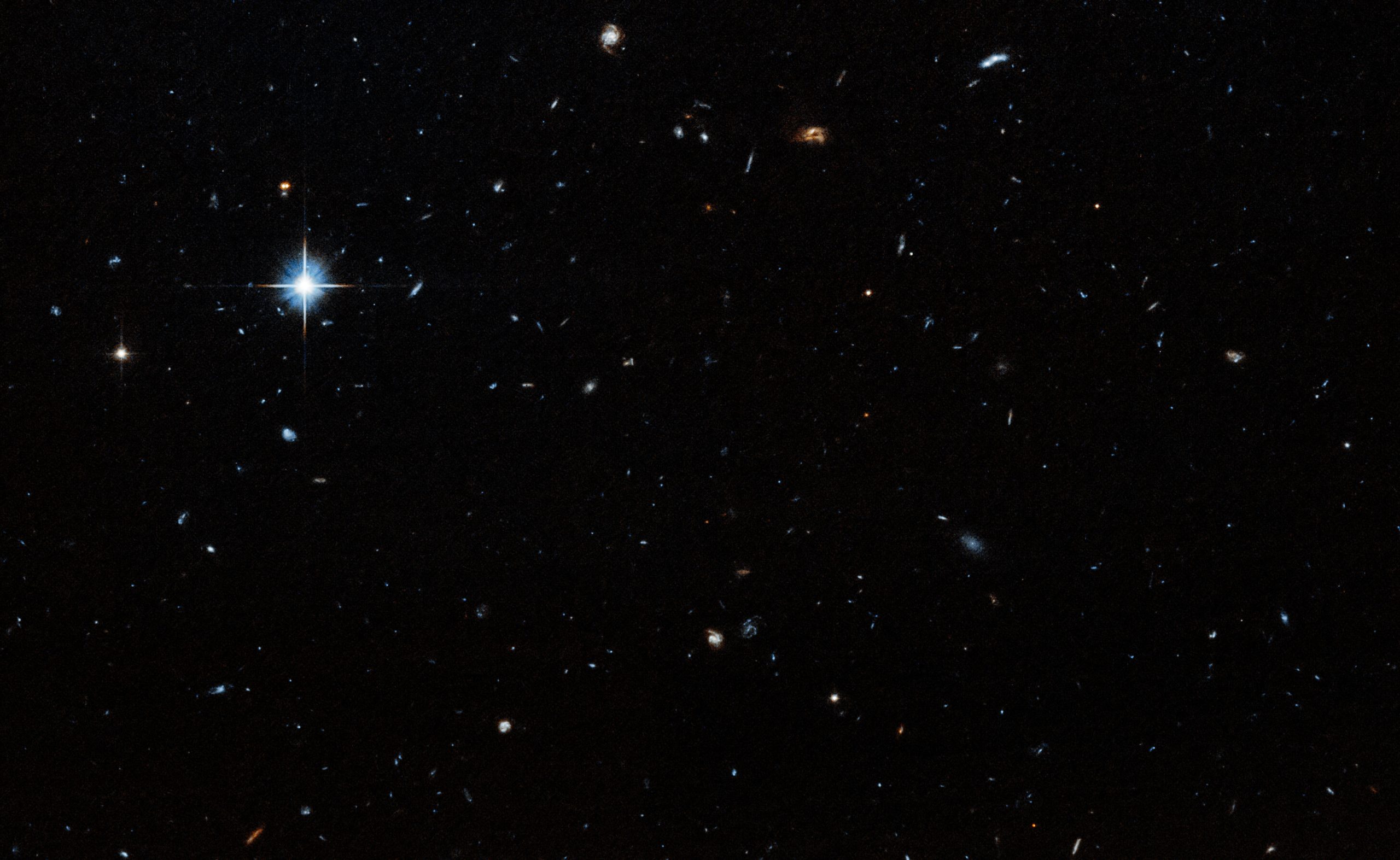
Researchers classify Cloud-9 as a Reionization Limited H I Cloud, also known as a RELHIC. NASA explained that H I refers to neutral hydrogen, and the RELHIC category describes an ancient hydrogen cloud from the early universe that remained pristine and starless.
Scientists have been searching for evidence of such an object for many years. Multiple observatories previously picked up hints of Cloud-9, but none had the resolution to prove what it really was.
Hubble Finally Confirms It
Ground-based telescopes detected the cloud as early as three years ago during a radio survey by the Five-hundred-meter Aperture Spherical Telescope in Guizhou, China. The Green Bank Telescope and the Very Large Array in the United States later confirmed its presence. Even so, astronomers could not be certain whether the object contained any stars.
That changed only after Hubble stepped in.
“Before we used Hubble, you could argue that this is a faint dwarf galaxy that we could not see with ground-based telescopes. They just didn’t go deep enough in sensitivity to uncover stars,” said lead author Gagandeep Anand of STScI.
“But with Hubble’s Advanced Camera for Surveys, we’re able to nail down that there’s nothing there.”
NASA says this breakthrough strongly suggests that many other failed galaxies may be hidden across the universe.
A Window Into the Dark Universe
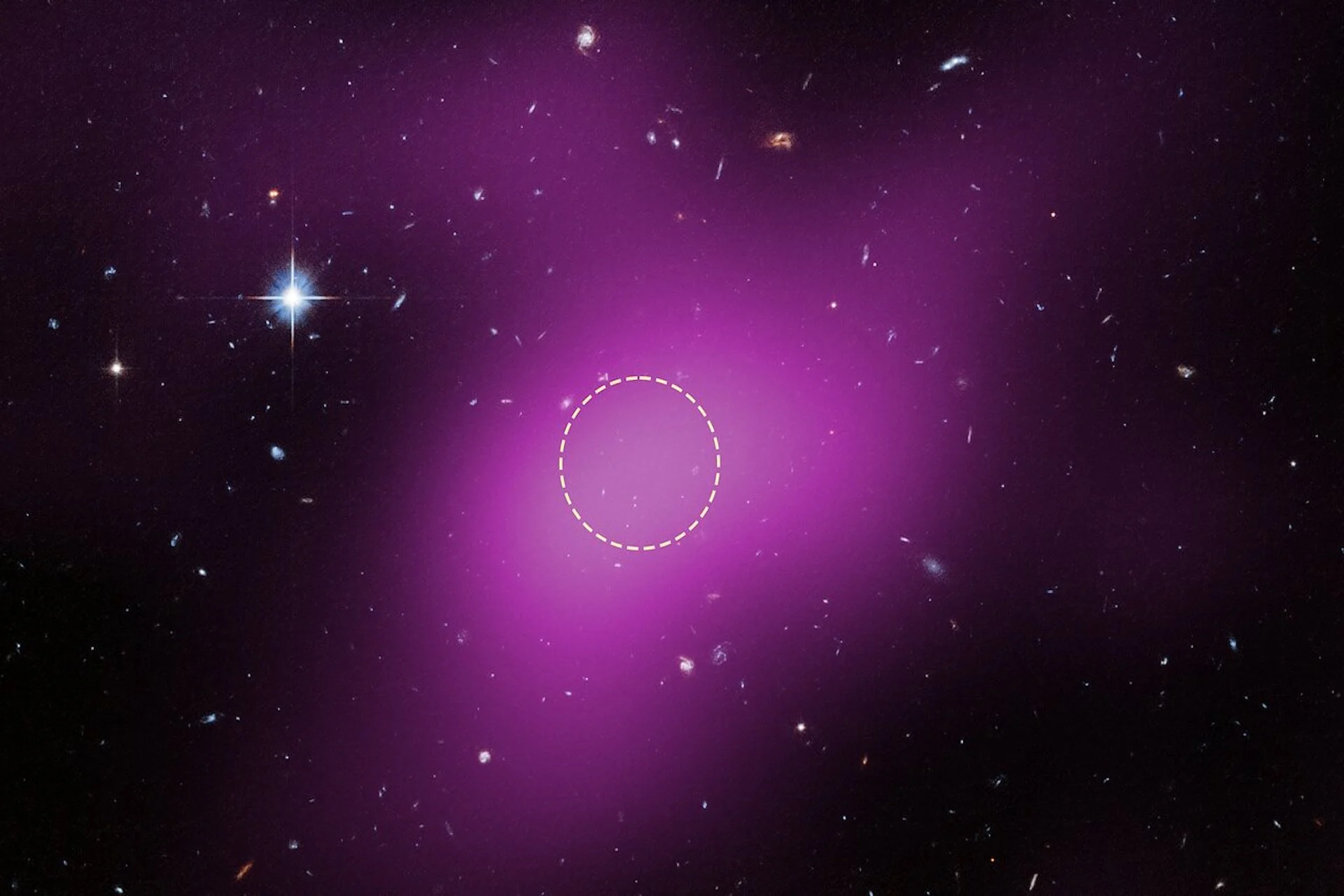
Cloud-9 appears to be dominated by dark matter, making it an exceptionally rare opportunity for scientists to study something that normally cannot be detected directly.
“This cloud is a window into the dark universe,” said team member Andrew Fox of the Association of Universities for Research in Astronomy/Space Telescope Science Institute (AURA/STScI) for the European Space Agency. “We know from theory that most of the mass in the universe is expected to be dark matter, but it’s difficult to detect this dark material because it doesn’t emit light. Cloud-9 gives us a rare look at a dark-matter-dominated cloud.”
NASA released an image showing Cloud-9’s location, highlighted by diffuse magenta radio signals captured by the Very Large Array. A dashed circle marks the region where researchers concentrated their star search, confirming the object is completely starless.
An Object From the Universe’s Youth
The cloud’s composition, isolation, and age offer a rare snapshot of what the cosmos looked like billions of years ago. Researchers now believe Cloud-9 may be one of many such forgotten structures scattered across space, trapped in a strange limbo between galaxy formation and galactic failure.
Cloud-9 sits 14 million light-years from Earth, quietly floating in the cosmic dark. Yet its existence may reshape how scientists understand the invisible matter that makes up most of the universe.