

The Federal Aviation Administration (FAA) lifted its nationwide ground stop Friday evening after more than four hours, bringing an end to an extraordinary disruption that affected airports and airlines across the United States.
The shutdown followed a communications failure involving aging air traffic control infrastructure, raising fresh concerns about the reliability of America’s aviation systems. Transportation Secretary Sean Duffy blamed outdated telecommunications equipment for the incident and warned that similar disruptions could happen again without major investment in modernization.
Aging Air Traffic Control Equipment Blamed for Nationwide Disruption
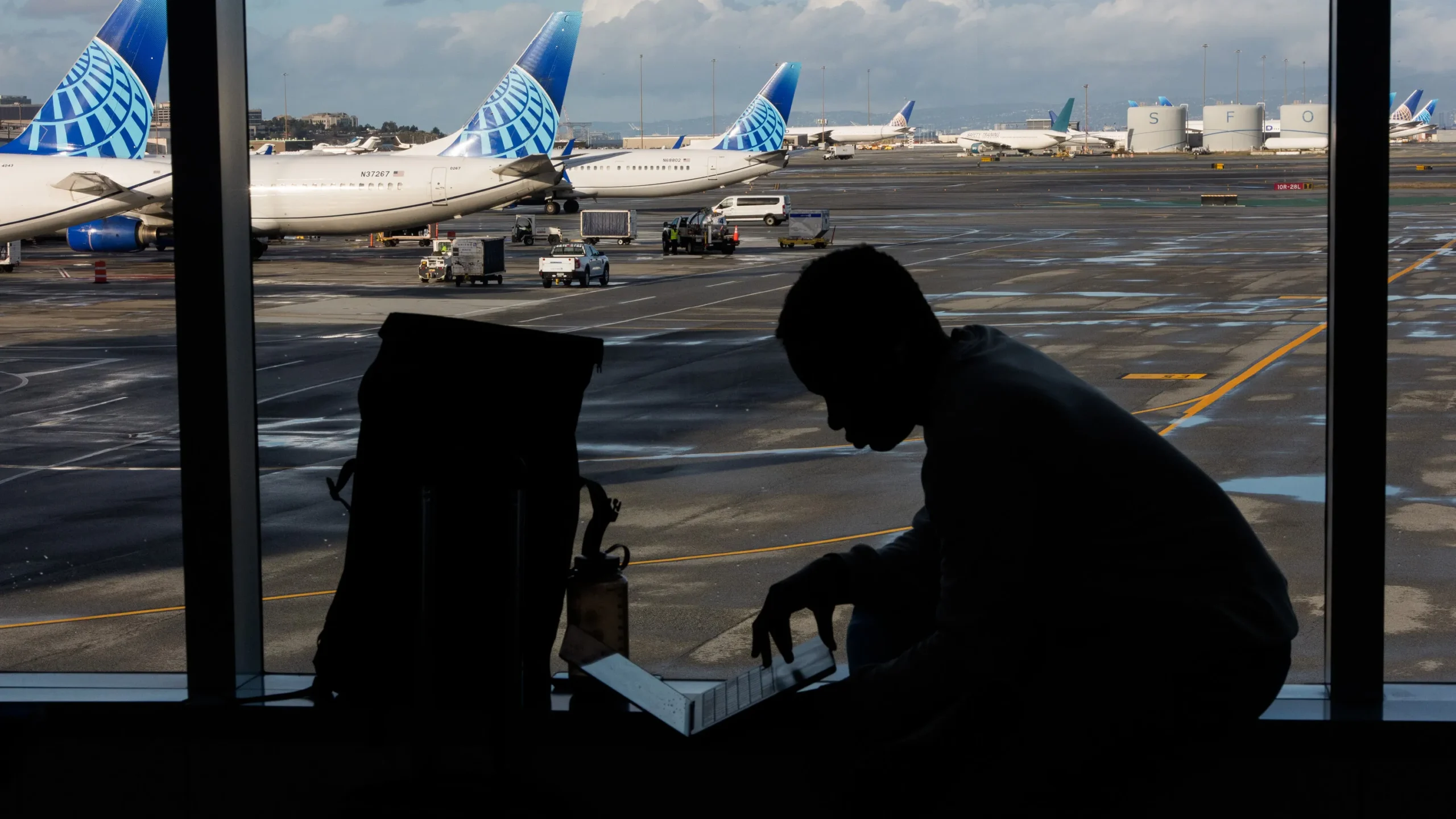
The disruption began at approximately 3:36 p.m. ET, when air traffic control facilities across the country experienced problems with radar information and communications with aircraft.
Speaking at a Friday evening news conference, Duffy explained that outdated analog telecommunications equipment, including switches and routers, became overwhelmed by data, creating instability across the system.
Earlier, the FAA announced that it had ordered the nationwide ground stop due to “extraordinary circumstances and for reasons of safety” connected to “communication issues.”
“It’s the old hardware that went down,” Duffy said, clarifying that newer equipment installed under the Trump administration remained operational.
He used the incident to renew his call for additional congressional funding to replace America’s aging air traffic control infrastructure. Earlier in the week, Duffy told Politico that the administration was seeking $30 billion from Congress for a nationwide modernization effort.
“You will have more of them unless the American people and the Congress tell us to build, and I can’t wait for that,” Duffy said, warning that future disruptions could force similar nationwide flight restrictions.
More Than 3,500 Aircraft Already in the Air
The scale of the disruption was particularly concerning because more than 3,500 aircraft were already flying toward airports across the United States when the FAA issued its ground stop.
However, Duffy stressed that the agency had not completely lost its radar or telecommunications capabilities. Officials continued managing essential flights, including medical evacuations and aircraft transporting lifesaving medications.
The FAA also confirmed that international flights arriving in the United States would “be managed on a case-by-case basis.”
Meanwhile, the agency provided no specific timeline for lifting the restrictions, instructing airlines that aircraft should remain grounded “until further notice.”
In a statement issued earlier Friday, the FAA confirmed that communications problems were “impacting multiple Air Route Traffic Control Centers.” Technicians were investigating the technical failure as the disruption spread across the aviation network.
A Justice Department source described the problem as a “frequency issue” and said officials had not identified any potential connection to terrorism.
Officials Rule Out Immediate Safety Threat, Cyberattack Investigation Continues
Homeland Security Secretary Markwayne Mullin sought to reassure passengers, insisting that the aviation disruption never placed travelers in immediate danger.
“The public was never at danger through this process. There was there was never any lives at risk,” Mullin said.
“There was no flights at risk. FAA was able to handle it. We did it out of an abundance of caution.”
Mullin also revealed that investigators had found “zero evidence” linking the communications failure to a cyberattack or rogue artificial intelligence. However, he stopped short of completely ruling out either possibility.
Furthermore, he confirmed that the Federal Emergency Management Agency had activated its response centers to support passengers stranded at airports.
FEMA was coordinating with airport authorities, local governments and state officials to address travelers’ immediate needs, particularly those requiring access to essential medications.
Airlines Face Hours of Delays as Flight Operations Slowly Recover
Although the FAA eventually lifted its nationwide restrictions, Duffy warned that returning to normal operations would take time.
He explained that airlines would gradually rebuild their flight schedules, with larger aircraft and flights receiving priority depending on crew availability.
“It’s going to take us some time to unwind what’s happened this afternoon,” Duffy said.
Nevertheless, he expressed confidence that flight operations would improve Saturday and return to normal before the busy Thanksgiving travel period.
Two FAA officials confirmed that Friday’s incident marked only the second nationwide ground stop since the September 11, 2001, terrorist attacks. The previous nationwide shutdown occurred in 2023.
White House and Congressional Leaders Seek Answers
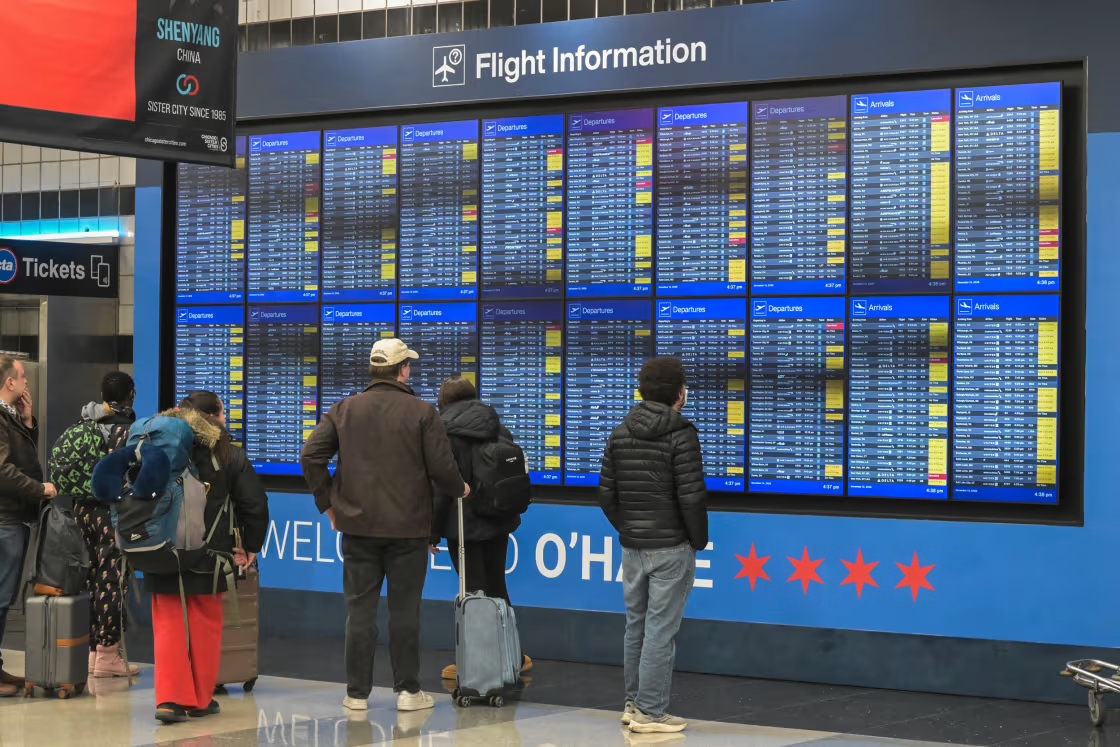
President Donald Trump had not publicly commented on the disruption by shortly before 9 p.m. ET. However, Duffy said the president had remained in frequent contact with him and Mullin throughout the incident.
“I know he is fully engaged because he has communicated with the both of us multiple times from the point that it happened to moments before I came out,” Duffy said.
Meanwhile, questions about the cause and potential security implications continued to emerge on Capitol Hill.
Rep. Jim Himes, the top Democrat on the House Intelligence Committee, said earlier Friday that he had not received information explaining what triggered the FAA shutdown. As a member of the Gang of Eight, he would typically receive briefings if an incident raised national security concerns.
Sen. Maria Cantwell, the leading Democrat on the Senate Commerce, Science and Transportation Committee, announced plans for a review of the technical failures.
The committee intends to examine “technology issues related to how planes communicate through primary frequencies, backup frequencies and other issues.”
At Denver International Airport, where several journalists and Democratic lawmakers were departing after attending a conference on the party’s future, Virginia Gov. Abigail Spanberger and Rep. Jason Crow of Colorado said they were still gathering information about the incident.
Sen. Cory Booker of New Jersey also expressed serious concerns about the breakdown during an interview at the Denver airport.
Describing the situation as a “significant breach or breakdown,” Booker stressed the need for accountability and improvements to prevent another nationwide disruption.
“Whether this is a breach or a breakdown, either one is unacceptable,” Booker said. “We need to learn from this, fix it and prevent it from ever happening again.”
Thousands of Passengers Stranded at Major Airports
Across the country, airports issued announcements informing passengers that departing flights were being held. Travelers were urged to contact their airlines directly for updated schedules and alternative arrangements.
American Airlines and Delta confirmed that flights already airborne would continue to their destinations. JetBlue, meanwhile, canceled all remaining Friday flights except those traveling to Europe.
Passengers who had already boarded aircraft or arrived at terminals faced uncertainty, with many preparing for extended delays.
At Jacksonville International Airport in Florida, a traveler heading to Atlanta reported that the pilot had announced a delay of at least seven hours.
At Newark Liberty International Airport, American Airlines representatives reportedly told passengers that further updates might not be available for another seven hours.
The situation was also frustrating for travelers at Los Angeles International Airport. A passenger aboard a flight scheduled for San Jose said the pilot announced around 1:15 p.m. local time that departure would be delayed by approximately 90 minutes. Passengers were subsequently instructed to leave the aircraft.
Flight Disruptions Exceed 15,000 Across the United States
The impact of the nationwide ground stop became increasingly clear as the evening progressed.
According to FlightAware, a flight-tracking service, more than 9,500 flight delays and over 5,300 cancellations had been recorded by approximately 9:25 p.m. ET.
Although the FAA eventually reopened the nation’s departure operations, the disruption left airlines facing a significant recovery challenge.
With Thanksgiving travel approaching, the incident has renewed scrutiny of America’s aging aviation infrastructure and the urgent need to modernize the systems responsible for keeping millions of passengers moving safely.
The immediate shutdown may have ended, but questions surrounding the reliability of the country’s air traffic control network remain.